
For florists, flower delivery businesses, wedding floral designers, plant shops, and event flower studios, online visibility is only useful when it leads to real action. A customer searching for birthday flowers, sympathy arrangements, wedding bouquets, or same-day flower delivery needs to find the right page, trust the business quickly, and know exactly how to place an order or request a consultation.
That is where SEO digital marketing becomes valuable for flower businesses. Instead of treating search rankings, paid ads, website design, local listings, content, and tracking as separate tasks, a stronger strategy connects them into one system. The original guide on SEO digital marketing that turns traffic into leads explains this broader principle well, and the same idea applies directly to floral brands competing for local and seasonal demand.
A flower shop may get website visits but still lose customers if the delivery area is unclear, the checkout process is difficult, or wedding enquiry forms feel too generic. Another florist may spend on ads but fail to measure which campaigns produce real orders. For a fuller view of how connected marketing channels can work together, review Digital Marketing Services.
Why Flower Businesses Need More Than Website Traffic
Flower purchases are often emotional, time-sensitive, and local. Someone ordering roses for an anniversary may want speed and convenience. A couple planning wedding florals may need confidence, style alignment, and a clear consultation path. A customer sending sympathy flowers may value sensitivity, delivery reliability, and simple ordering.
Because the intent changes by occasion, a floral website should not rely on one generic homepage to convert every visitor. SEO digital marketing helps connect the searcher’s need with the right page, message, and next step.
For flower businesses, the gap between traffic and revenue often appears in a few common places:
- Ranking for broad floral keywords but not converting visitors into orders.
- Running ads for flower delivery without sending users to a clear delivery-focused landing page.
- Receiving wedding flower enquiries that lack enough detail to qualify the lead.
- Getting local searches but having weak Google Business Profile information.
- Not knowing which search terms, ads, or pages produce calls, forms, and purchases.
What SEO Digital Marketing Includes for Florists
For a flower-focused business, SEO digital marketing usually combines organic search, local visibility, paid search, website experience, content, and conversion tracking. Each part supports the others. SEO brings relevant visitors in, paid search captures urgent demand, landing pages help visitors act, and analytics show what is working.
Businesses that want long-term visibility often pair content and technical improvements with SEO Services that address search intent, site structure, and conversion opportunities together.
Important pieces for floral brands may include:
- Local SEO: Helping customers find nearby flower delivery, florist locations, wedding flower consultations, and event floral services.
- Service and occasion pages: Creating focused pages for birthday flowers, funeral flowers, wedding flowers, corporate flowers, subscriptions, and same-day delivery.
- Google Business Profile optimization: Keeping hours, service areas, categories, photos, reviews, and contact details accurate.
- Paid search campaigns: Capturing urgent searches such as flower delivery near me or same-day florist when organic rankings are still building.
- Conversion-focused website design: Making order buttons, call buttons, delivery details, and consultation forms easy to find.
- Tracking and analytics: Measuring calls, forms, purchases, and key website actions through tools such as GA4 and Google Tag Manager.
How Search Intent Changes Across Flower Customers
Not every flower customer searches with the same level of urgency. A strong SEO and digital marketing strategy separates quick-purchase searches from research-based searches and high-value consultation searches.
Urgent Flower Delivery Searches
Searches for same-day flower delivery, nearby florists, or last-minute bouquets usually need direct landing pages. These pages should quickly explain delivery areas, order cut-off times, product options, and how to complete the purchase.
Occasion-Based Searches
Customers looking for birthday flowers, sympathy arrangements, anniversary bouquets, or Valentine’s Day flowers may compare options based on design, price, delivery availability, and trust. These pages should match the emotional context of the occasion while keeping ordering simple.
Wedding and Event Floral Searches
Wedding flower and event floral searches are usually more research-heavy. Visitors may want galleries, service scope, consultation details, style information, and a form that helps them explain their event needs. These leads may not convert instantly, so tracking form submissions and consultation requests becomes especially important.
Local SEO for Flower Shops and Floral Delivery Areas
Local SEO matters because many flower purchases are tied to place. Customers often search by neighbourhood, city, delivery area, or nearby availability. A florist serving multiple areas should make location relevance clear without creating thin or duplicated pages.
For example, a flower shop serving Toronto, Mississauga, Vaughan, Markham, or other nearby areas may need separate location-aware content if each area has meaningful delivery details, service differences, or customer intent. The goal is not to create pages just for keywords. The goal is to help searchers understand whether the florist serves their area and how to order confidently.
Local flower SEO should usually focus on:
- Clear service areas and delivery zones.
- Accurate name, address, phone number, and business hours.
- Optimized Google Business Profile information.
- Useful location pages where appropriate.
- Mobile-friendly pages for customers ordering quickly.
- Strong internal links between occasion pages, delivery pages, and contact options.
SEO vs PPC for Florists
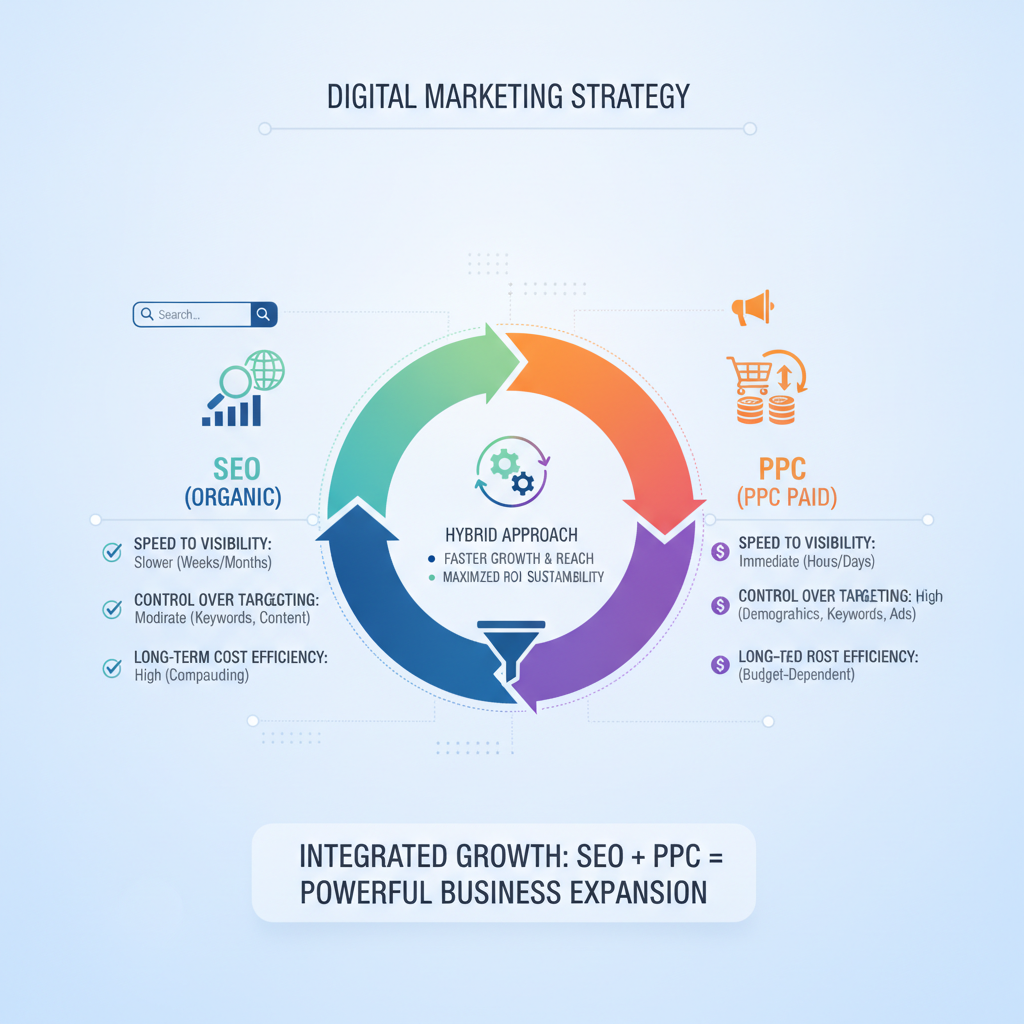
SEO and PPC both help flower businesses appear in search results, but they work differently. SEO builds unpaid visibility over time, while PPC can place ads in front of customers quickly. The best choice depends on urgency, budget, competition, seasonality, and website readiness.
SEO for Flower Businesses
SEO is useful for building long-term visibility for important floral searches such as wedding flowers, florist near me, flower delivery, funeral flowers, and seasonal arrangements.
- Best fit: Florists that want durable visibility and can improve their website over time.
- How it works: Search rankings improve through better technical health, relevant pages, local signals, internal linking, and useful content.
- Important note: SEO is not only about blog posts. Product categories, service pages, delivery pages, and local pages often matter more for commercial intent.
PPC for Flower Businesses
PPC can help florists show up quickly for high-intent searches, especially during seasonal peaks or when launching a new delivery area or service.
- Best fit: Businesses that need faster visibility for searches with clear buying intent.
- How it works: Ads appear for selected keywords based on targeting, bids, ad relevance, and landing page quality.
- Important note: Paid clicks can be wasted if ads send customers to broad pages that do not match the search.
Hybrid SEO and PPC
A combined approach can work well for florists because paid search can capture urgent orders while SEO builds stronger organic visibility.
- Best fit: Flower businesses that want both short-term demand capture and long-term search growth.
- How it works: PPC data can reveal which search terms convert, while SEO can turn those insights into permanent pages and content improvements.
- Important note: Seasonal flower demand often benefits from planning ahead, not last-minute campaign setup.
How to Turn Floral Website Visitors Into Leads and Orders
Getting someone to a flower website is only the first step. The page must make the next action easy. For a flower shop, that action may be placing an order, calling the store, requesting a wedding consultation, asking about event flowers, or joining a subscription programme.
Step 1: Match Each Page to One Main Customer Need
A wedding flowers page should not feel the same as a same-day delivery page. Each page should answer the questions that matter for that specific search.
Watch for: Pages that list every service without guiding the visitor toward a clear action.
Practical outcome: Better relevance for both search engines and customers.
Step 2: Make Delivery Details Easy to Understand
Flower delivery customers often need to know whether you serve their area, when delivery is available, and how quickly they can order.
Watch for: Hidden delivery zones, unclear cut-off times, or vague service area language.
Practical outcome: Fewer confused visitors and a clearer path to purchase.
Step 3: Improve Calls to Action
Florists should make ordering, calling, and enquiry options visible on mobile and desktop. A visitor should not have to search for the next step.
Watch for: Buttons that are hard to see, forms that are too long, or missing phone links on mobile.
Practical outcome: A smoother experience for customers ready to act.
Step 4: Use Trust Signals Where They Matter
Flower customers want to feel confident, especially for emotional occasions. Useful trust signals may include clear service descriptions, real product photography, review visibility, policies, and contact information.
Watch for: Beautiful pages that lack practical reassurance.
Practical outcome: Visitors can judge fit faster and move forward with more confidence.
Step 5: Track Orders, Calls, and Enquiries Properly
Without reliable tracking, it is difficult to know whether SEO, PPC, local search, or social traffic is producing meaningful results.
Watch for: Missing call tracking, duplicate conversions, or forms that are not connected to analytics.
Practical outcome: Better decisions about where to invest marketing effort.
Content Ideas That Fit a Flower Website and Support SEO
Content marketing for florists should not be limited to generic flower-care articles. Helpful content can support search visibility while guiding customers toward the right service or product.
Useful flower content may include:
- Guides to choosing flowers for birthdays, anniversaries, sympathy, weddings, and corporate events.
- Seasonal pages for Valentine’s Day, Mother’s Day, holidays, and spring arrangements.
- Flower care tips that link naturally to relevant products or services.
- Wedding flower planning resources that support consultation enquiries.
- Local delivery information for specific service areas.
- Educational pages explaining bouquet styles, arrangement types, and floral design options.
The strongest content usually connects helpful information with commercial intent. A guide to sympathy flowers, for instance, should be respectful and useful while also making it simple to view appropriate arrangements or contact the florist.
What Impacts ROI in Digital Marketing for Florists
Return on investment in floral digital marketing depends on more than traffic volume. The quality of the visitor, the clarity of the offer, the ease of ordering, and the accuracy of tracking all influence performance.
Key ROI factors include:
- Search intent: A smaller number of high-intent visitors can be more valuable than broad traffic that is only browsing.
- Landing page relevance: A same-day delivery ad should lead to a same-day delivery page, not a general homepage.
- Seasonal timing: Flower demand can rise around specific occasions, so SEO pages and paid campaigns should be prepared before demand peaks.
- Mobile experience: Many flower orders and local searches happen on mobile devices, so speed and usability matter.
- Tracking accuracy: Calls, forms, online orders, and consultation requests should be measured clearly.
- Follow-up process: Wedding and event enquiries may require timely, organized follow-up to become booked business.
Choosing a Digital Marketing Agency for a Flower Business
Florists should evaluate a marketing agency based on fit, not just presentation. A useful agency conversation should include questions about services, delivery areas, seasonal demand, average order types, consultation flow, and tracking.
When reviewing an agency, consider:
- Local SEO knowledge: Can they explain how map visibility, local pages, and Google Business Profile optimization work together?
- Paid search discipline: Can they manage search terms, negative keywords, landing pages, and conversion tracking?
- Website implementation: Can they help improve page structure, speed, forms, and calls to action?
- Measurement: Can they separate traffic growth from orders, calls, and qualified enquiries?
- Communication: Do reports explain what changed, why it changed, and what should happen next?
Common Digital Marketing Mistakes Flower Businesses Should Avoid
- Sending all traffic to the homepage: Different searches need different landing pages.
- Ignoring local search: Florists often depend on nearby customers and delivery-area searches.
- Using seasonal pages too late: Holiday and event-related pages need time to be discovered, improved, and promoted.
- Not tracking phone calls: Many customers still call before ordering, especially for urgent or custom requests.
- Publishing content without commercial paths: Helpful flower content should guide readers toward relevant products, services, or enquiries.
- Overlooking mobile usability: A slow or confusing mobile site can weaken both SEO and paid campaign results.
FAQs About SEO Digital Marketing for Flower Businesses
How long does SEO take for a florist?
SEO usually takes time because rankings depend on competition, site quality, content relevance, local signals, and technical health. Florists may see early improvements in impressions, clicks, or local visibility before consistent order or enquiry growth becomes clear.
Should a flower shop use both SEO and PPC?
Many flower businesses can benefit from both. PPC can help capture urgent searches quickly, while SEO builds longer-term visibility for delivery, occasion, wedding, and local floral searches.
What should florists measure besides website visits?
Important metrics include online orders, phone calls, contact forms, wedding consultation requests, delivery-area searches, landing page conversion rates, and campaign-specific lead quality.
Can local SEO help a florist compete with larger flower delivery websites?
Yes, local SEO can help a florist appear for nearby and location-specific searches, especially when service areas, Google Business Profile details, reviews, website pages, and mobile experience are aligned.
How can a florist get tailored marketing advice?
If you want to discuss SEO, PPC, website performance, or tracking for a flower business, you can Book a Free Strategy Call with Zigma Internet Marketing.
A Connected Marketing System Helps Flower Businesses Grow More Reliably
SEO digital marketing works best when every part of the customer journey supports the next step. For florists, that means the right search visibility, useful local information, occasion-specific pages, clear ordering paths, and reliable tracking.
A flower business does not need more traffic for the sake of traffic. It needs the right visitors, the right message, and a website experience that makes ordering or enquiring simple. When SEO, PPC, content, website improvements, and analytics work together, floral brands are better positioned to turn online attention into real orders, calls, and consultations.