
Why flower businesses need an online marketing agency
For florists, flower shops, wedding floral designers, plant boutiques, and gift delivery brands, digital marketing is not just about getting more website visits. It is about helping the right customers find the right bouquet, arrangement, event service, or delivery option at the moment they are ready to order. An online marketing agency can help connect search visibility, paid advertising, website design, content, and tracking so your flower business can turn online interest into calls, orders, consultations, and repeat customers.
This matters because floral businesses often rely on a mix of urgent searches, seasonal demand, event planning, and local reputation. A customer looking for same-day flowers in Toronto behaves differently from someone researching wedding centrepieces months in advance. For a broader business-focused view, this online marketing agency advice for Toronto businesses explains why growth depends on diagnosing the real bottleneck before choosing tactics.
For a flower-focused website, that same principle is especially important. If your floral shop is not appearing in local search, SEO Services may be the right starting point. If you need immediate visibility for Valentine’s Day, Mother’s Day, wedding consultations, sympathy flowers, or same-day delivery, paid campaigns may need to support demand in the short term. The key is knowing which channel solves the problem you actually have.
What an online marketing agency does for florists and flower shops
A strong agency does more than post pretty bouquet photos or run generic ads. For a floral business, the work usually starts with a practical review of how customers discover, compare, and purchase. That may include organic rankings, Google Business Profile visibility, delivery-area pages, product pages, checkout friction, consultation forms, call tracking, seasonal landing pages, and customer journey gaps.
A local florist may need google business profile optimization, local seo gta, clearer delivery information, better category pages, and stronger review signals. A wedding florist may need content marketing toronto, gallery organization, inquiry forms, and service pages that help couples understand style, availability, and next steps. A flower delivery store may need product feed improvements, paid search campaigns, and conversion-focused checkout pages.
Paid media such as Google Ads Management can also be useful for high-intent searches like flower delivery, funeral flowers, corporate arrangements, or seasonal bouquets. But even paid traffic can underperform if the landing page is slow, unclear, or missing details about delivery windows, service areas, pricing expectations, or contact options.
Why Toronto floral marketing needs a local strategy
Flower searches are highly local and time-sensitive
Businesses serving Toronto, Ontario often compete in a crowded local search market. This is especially true for flower shops because many customers search with urgent intent: same-day delivery, nearby florist, sympathy arrangement, birthday bouquet, or flowers for a specific neighbourhood. A broad digital marketing toronto approach is not enough if it does not account for local buying behaviour.
For flower businesses, appearing in search is only part of the job. The visitor also needs quick reassurance: Do you deliver to their area? Can they order today? Are the arrangements suitable for the occasion? Is there a phone number or easy checkout path? This is where conversion rate optimization toronto, mobile design, page speed, product clarity, and trust signals become just as important as traffic generation.
Neighbourhood intent affects floral campaigns
Marketing across downtown Toronto, North York, Scarborough, Etobicoke, and the wider GTA may involve the same core floral services, but search patterns can differ. Downtown customers may search for fast delivery or office gifting. Residential neighbourhoods may generate more birthday, anniversary, sympathy, or holiday searches. Wedding and event customers may browse more slowly and compare style, portfolio, and consultation options.
That is why a digital marketing agency toronto or marketing agency gta should structure campaigns around service areas, occasions, product categories, and customer intent rather than treating all flower buyers as one audience. The local layer affects SEO pages, paid ad groups, landing page copy, image selection, and lead qualification.
Flower marketing should support real business goals
Some floral businesses want more online orders. Others want higher-quality wedding inquiries, more corporate accounts, better visibility for funeral flowers, or stronger seasonal performance. A retail florist may need online marketing toronto visibility connected to local pickup and delivery. A studio florist may need website design toronto support because the site does not present portfolio work clearly enough to convert event leads.
The best agency fit is one that connects traffic, product or service intent, landing pages, tracking, and follow-up into one system. If those pieces are treated separately, floral marketing often becomes busy but not consistently productive.
How to choose the right online marketing agency for a flower business
Choosing an agency becomes easier when you look beyond service lists and ask how the team thinks. A useful partner should explain how they prioritize work, what they will measure, how they will improve campaigns, and what they need from your floral team, such as product information, seasonal offers, delivery rules, photography, or service-area details.
A flower business often needs both strategy and execution. Strategy without implementation leaves ideas unfinished. Execution without strategy can lead to scattered posts, unfocused ads, and pages that do not match real customer searches. The best fit usually combines both.
Step 1: Start with the floral business goal
Decide whether the priority is more online bouquet orders, more wedding consultations, stronger local delivery visibility, better seasonal campaigns, or improved return from existing ad spend. This helps the agency focus on the actual growth constraint instead of offering every service at once.
What to check: Ask how success will be measured in calls, form submissions, online orders, consultation requests, or lead quality.
What can go wrong: If the goal is vague, reports may focus on traffic or impressions without showing whether more customers are ordering flowers.
Example: A florist searching for a lead generation agency Toronto may need a different strategy than a floral e-commerce brand focused on checkout conversions.
Step 2: Review channel depth, not just the service menu
Many agencies offer SEO, ads, content, social media, and web design. The difference is in how deeply they work. For a flower business, ask how they handle technical seo services, local landing pages, product category structure, seasonal campaign planning, negative keyword management, and conversion tracking.
What to check: Look for clear processes around audits, testing, reporting, landing page improvements, and campaign refinement.
What can go wrong: Broad promises without process can lead to unclear accountability and weak campaign direction.
Example: An seo company toronto helping a florist should be able to discuss location pages, occasion-based searches, internal linking, image optimization, and product-page structure in practical terms.
Step 3: Look closely at tracking and attribution
If tracking is incomplete, a flower shop may not know whether calls, orders, or inquiries are coming from SEO, paid ads, Google Business Profile, social media, or email. A capable agency should understand GA4, tag management, form tracking, call tracking, e-commerce tracking, and reporting limits.
What to check: Ask how they separate primary conversions, such as purchases and inquiry forms, from softer actions, such as gallery views or button clicks.
What can go wrong: A campaign can appear successful if traffic rises, even when order quality or inquiry quality does not improve.
Example: Strong google ads management toronto for flower delivery depends on accurate conversion signals, especially during high-demand seasonal periods.
Step 4: Treat the website as part of marketing
Your website is often where flower marketing succeeds or fails. Product photos, mobile layout, delivery information, occasion categories, checkout flow, form length, and trust elements all affect whether visitors take action. Many floral businesses need support across both marketing and Website Design & Development.
What to check: Ask how the agency improves landing pages, product pages, mobile usability, and consultation forms.
What can go wrong: Even strong traffic can underperform if visitors cannot quickly find the right arrangement, delivery area, or next step.
Example: A florist searching for seo services toronto may need website improvements before adding more blog content or paid traffic.
Step 5: Judge communication before signing
Good agency communication should feel practical and direct. The team should explain trade-offs, timelines, channel roles, and limitations clearly. That matters for flower businesses because seasonal campaigns, product availability, delivery capacity, and event schedules can change quickly.
What to check: Look for realistic expectations, clear reporting, and a willingness to explain what should happen first.
What can go wrong: If every answer is polished but vague, it may be difficult to know what is happening once campaigns are live.
Example: A florist comparing a ppc agency toronto with a full-service agency should hear where paid search fits and where SEO, website improvements, or local optimization may be more important.
What affects ROI in flower shop digital marketing
For floral businesses, campaign performance is rarely determined by one channel alone. A flower delivery ad may look expensive when the landing page does not clearly show delivery options. SEO may seem slow when service pages are thin or technical issues prevent important pages from being indexed properly. Social media may generate attention without orders if it is not connected to product pages or inquiry paths.
Three factors often shape results. First, search intent: are you visible for the searches that match your most valuable services and products? Second, conversion friction: can a visitor quickly choose, order, call, or inquire? Third, measurement quality: can you tell which campaigns produce useful customers rather than just traffic?
A practical way to think about ROI is this: traffic creates opportunity, while the website and follow-up process determine how much of that opportunity becomes revenue. For flower businesses, both sides matter because customer intent can be immediate, emotional, seasonal, or highly visual.
Key ROI drivers for floral marketing
- Intent fit: Same-day delivery searches behave differently from wedding flower research, so campaigns should be structured accordingly.
- Landing page relevance: Ads and search listings should lead to pages that match the customer’s occasion, location, or product need.
- Tracking quality: Reliable reporting helps separate real orders and inquiries from less meaningful website activity.
- Offer clarity: Customers need to understand delivery options, ordering steps, consultation availability, and service scope.
- Ongoing refinement: Search terms, seasonal pages, ad negatives, product descriptions, and page tests should improve over time.
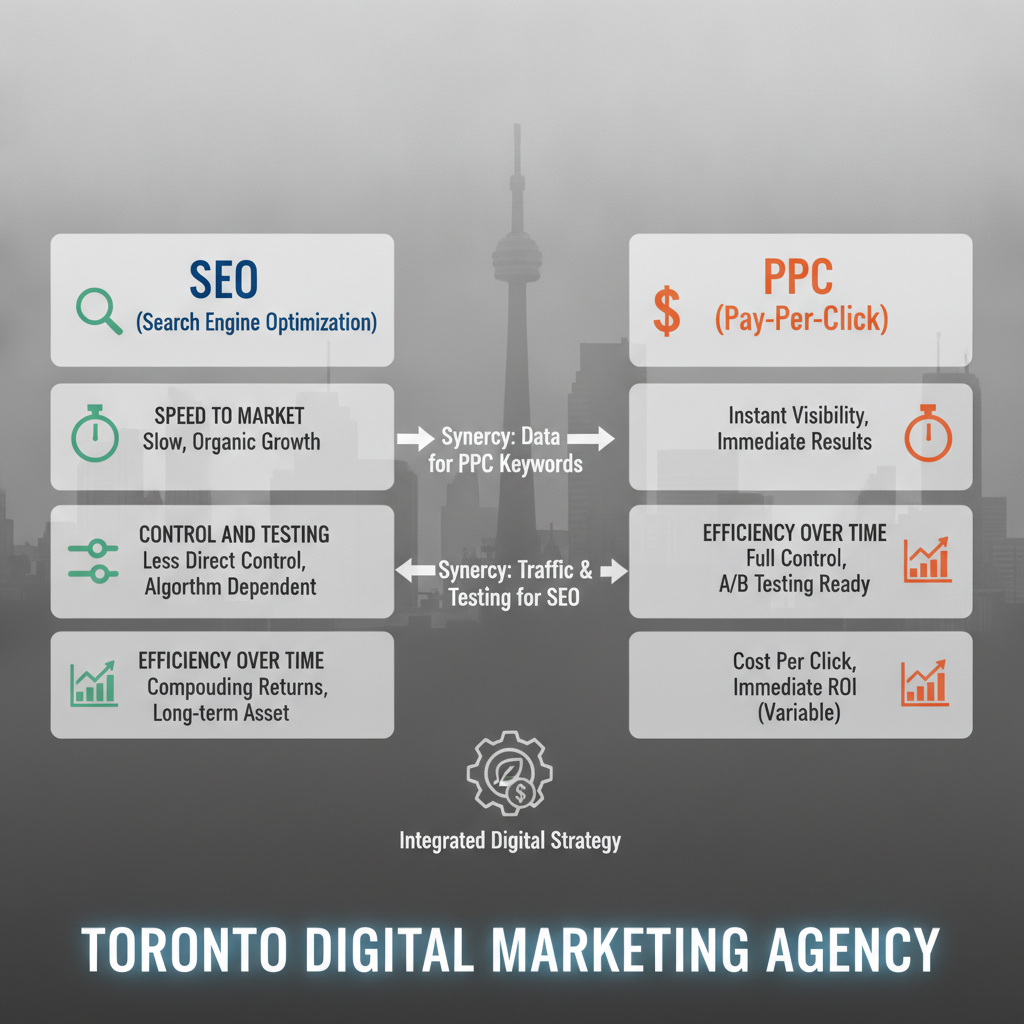
SEO vs PPC for florists: when each strategy makes sense
Florists often ask whether SEO or PPC is better. The stronger question is what each channel should do. SEO can build long-term visibility for flower delivery, wedding flowers, sympathy arrangements, and local floral services. PPC can help capture immediate demand, promote seasonal offers, or support important occasions when timing matters.
Speed to market
A) SEO: SEO builds visibility gradually as pages are improved, expanded, and trusted by search engines.
- How it works: The agency improves technical health, on-page structure, internal links, location relevance, and content targeting.
- Best fit: Florists that want durable visibility for delivery, occasions, event services, and local searches.
- Example: A flower shop building pages for delivery areas, occasions, and wedding floral services.
B) PPC: PPC can create visibility quickly once campaigns, landing pages, and tracking are set up.
- How it works: Ads appear for selected searches, controlled by bids, keywords, negatives, location targeting, and creative.
- Best fit: Flower businesses that need immediate visibility for seasonal or high-intent searches.
- Example: A florist promoting Valentine’s Day bouquets or same-day delivery in a defined service area.
C) Combined approach: SEO and PPC often work best when each has a clear role.
- How it works: Paid search captures short-term demand while SEO builds longer-term non-paid visibility.
- Best fit: Florists that need both immediate order flow and stronger organic presence over time.
- Example: A floral brand using PPC during peak seasons while developing organic pages for ongoing searches.
Control and testing
A) SEO: SEO gives strong control over website content and structure, but testing cycles are usually slower.
- How it works: Updates are made to pages, content, links, and technical foundations, then measured over time.
- Best fit: Florists willing to improve product categories, service pages, and local search foundations.
- Example: A wedding florist creating detailed service pages around ceremony flowers, centrepieces, and bridal bouquets.
B) PPC: PPC can test offers, keywords, and landing pages more quickly.
- How it works: The agency adjusts ad copy, keyword match types, audiences, and landing pages based on conversion data.
- Best fit: Flower businesses that need faster feedback on products, promotions, or inquiry messages.
- Example: A florist testing whether “same-day delivery” or “designer’s choice bouquet” produces better order quality.
C) Combined approach: Paid data can inform SEO, and organic insights can improve paid campaigns.
- How it works: Search term data, landing page behaviour, and conversion reports are shared across channels.
- Best fit: Floral businesses that want channels to reinforce each other instead of operating separately.
- Example: A flower shop using paid search data to decide which occasion pages deserve deeper SEO investment.
Efficiency over time
A) SEO: SEO can improve acquisition efficiency over time if the website, content, and offer are strong.
- How it works: Once pages rank and convert, they can continue attracting customers without paying for each click.
- Best fit: Florists focused on long-term local visibility and less dependence on ads.
- Example: A shop building evergreen pages for funeral flowers, birthday flowers, and neighbourhood delivery.
B) PPC: PPC efficiency depends on query quality, ad relevance, landing page strength, and tracking accuracy.
- How it works: Performance improves through search term reviews, negative keywords, budget control, and page refinement.
- Best fit: Flower businesses prepared to manage campaigns actively, especially around seasonal demand.
- Example: A florist reducing irrelevant clicks by excluding searches that do not match its delivery area or service offering.
C) Combined approach: A mixed strategy can balance speed and long-term growth.
- How it works: SEO builds the foundation while PPC supports urgent campaigns, new services, and peak periods.
- Best fit: Florists that want steadier visibility across both immediate and research-based searches.
- Example: A floral studio using PPC for wedding consultation campaigns while organic portfolio and service pages mature.
How Toronto flower businesses can compete online
Local floral competition is not won by copying large national brands. Smaller and mid-sized flower businesses often gain ground by being more specific, more local, and easier to buy from. Clear product categories, accurate delivery information, strong Google Business Profile signals, helpful occasion pages, and fast follow-up can all improve performance.
For Toronto-area florists, practical improvements often start with search intent. Pages should reflect real customer needs, such as flower delivery, wedding flowers, sympathy arrangements, corporate flowers, seasonal bouquets, or local pickup. Location relevance should be included where it helps the customer. Paid campaigns should separate urgent buying searches from broader browsing terms. Mobile pages should make ordering or contacting the shop simple.
Operational readiness matters too. A florist can increase visibility and still lose opportunities if calls are missed, product availability is unclear, forms go unanswered, or delivery details are hard to confirm. Marketing can create demand, but the customer experience needs to support it.
Where flower businesses often gain ground
- Local intent coverage: Build pages around real combinations of services, occasions, and service areas.
- Visual trust: Strong photography, organized galleries, reviews, and clear product information can improve confidence.
- Fast response: Quick replies to wedding, funeral, and custom arrangement inquiries can make a meaningful difference.
- Seasonal planning: Campaigns for major floral occasions should be prepared before demand peaks.
- Simple mobile experience: Many flower buyers are ready to act quickly, so ordering and contact paths should be easy on smaller screens.
Signals experienced marketers watch in floral campaigns
- Traffic quality matters more than traffic volume: A page with fewer visitors but more orders or qualified inquiries may be more valuable than a high-traffic page with weak intent.
- Search terms reveal mismatches: In paid search, wasted spend can hide in queries that sound related to flowers but do not match your products, delivery area, or customer type.
- Technical issues can limit growth: Slow pages, duplicate product content, indexing problems, broken tracking, or confusing navigation can reduce results even when the strategy is sound.
- Seasonality changes behaviour: Campaigns for holidays, weddings, sympathy flowers, and corporate gifting should not all be measured or structured the same way.
Practical takeaways before choosing an agency
An online marketing agency is most useful for flower businesses when it can diagnose the real growth constraint, connect channels into one measurement system, and improve the website experience that turns visitors into orders, calls, or inquiries. For businesses in Toronto, Ontario, that often means balancing local SEO, paid search, conversion design, tracking, and seasonal planning.
It also helps to keep expectations realistic. SEO usually takes time. PPC needs careful management. Website improvements can affect every channel. For florists, the strongest agency relationship is one that understands both digital marketing and the practical realities of flowers: local delivery, visual presentation, occasion-based buying, seasonal peaks, and customer urgency.
If you want tailored guidance on Digital Marketing Services for your floral or local business, Zigma Internet Marketing brings together SEO, PPC, web, content, and analytics with clear reporting and conversion-focused execution. 📩 Ask an SEO/PPC question.
FAQs About Online Marketing Agencies for Flower Businesses
Does a florist need an online marketing agency or just social media help?
It depends on the problem. If you only need help publishing content, social media support may be enough. If your flower business needs better search visibility, paid campaigns, website conversion, tracking, and local lead generation, an agency may be more practical.
How long does SEO take for a flower shop?
SEO usually builds over time because search engines need to crawl, understand, and trust improved pages. The timeline depends on your current website, competition, technical health, content quality, and local search presence.
Can PPC help with seasonal flower sales?
Yes, PPC can be useful for seasonal demand when campaigns are set up with clear targeting, relevant landing pages, accurate tracking, and careful budget control. It can support occasions such as Valentine’s Day, Mother’s Day, holidays, weddings, and sympathy flower searches.
What should Toronto florists ask during an agency evaluation?
Ask how the agency handles local SEO, Google Business Profile visibility, delivery-area targeting, conversion tracking, landing page improvements, and seasonal campaign planning. For Toronto, Ontario, it is also useful to ask how they manage neighbourhood-level search intent and local competition.
Can SEO and PPC work together for a flower business?
Yes. PPC can capture immediate high-intent searches, while SEO builds longer-term visibility for delivery, occasions, events, and local services. The combination works best when search terms, landing page results, and conversion data are shared across both channels.
Related Topics:
- flower shop SEO
- florist digital marketing
- local search marketing
- Google Ads for florists
- floral website design
- conversion optimization
- analytics and tracking setup