
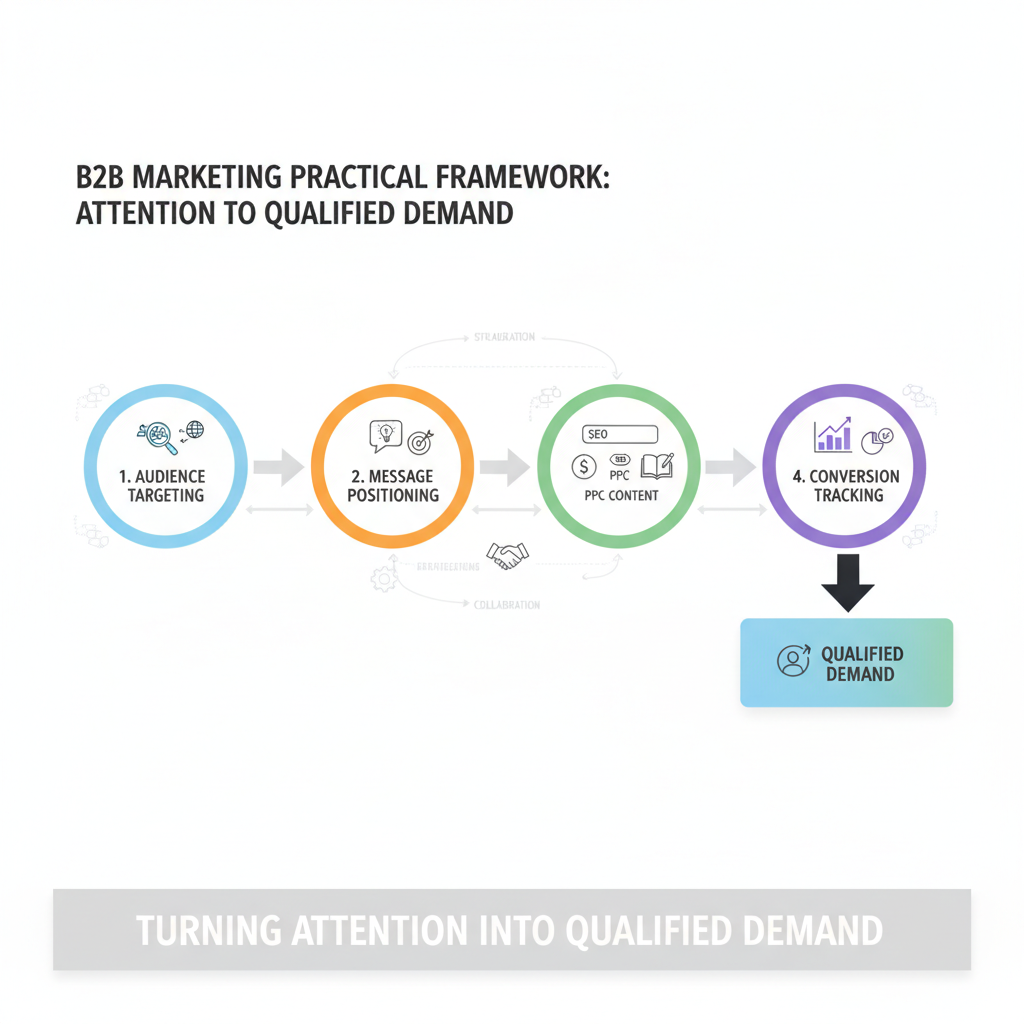
Marketing B2B in the flower industry is about reaching business buyers who purchase floral products, services, or supply support for practical outcomes. That may include hotels ordering lobby arrangements, offices setting up weekly flower subscriptions, event planners sourcing reliable floral partners, retailers buying from growers or wholesalers, or venues looking for preferred florist relationships. Unlike one-time consumer flower orders, B2B floral buying often involves repeat purchasing, budget approval, delivery expectations, service reliability, and trust built over time.
For flower businesses that sell to other businesses, visibility alone is not enough. A corporate buyer, wedding planner, restaurant group, or retail florist may compare several suppliers before starting a conversation. A useful overview of marketing B2B that turns attention into qualified demand explains why strong B2B campaigns need to focus on buying readiness, not just clicks or impressions.
In the floral world, that means your marketing should answer the questions business buyers actually ask: Can you deliver consistently? Do you understand event timelines? Can you handle recurring orders? Do you offer seasonal availability? Are your arrangements, wholesale stems, or floral services suitable for professional settings? Strong Digital Marketing Services can help connect those answers to the right audience through search, content, paid campaigns, landing pages, and measurement.
Why marketing b2b is different for flower companies
Consumer floral marketing often focuses on emotion, convenience, gifting occasions, and fast purchase decisions. B2B flower marketing is different because the buyer is usually thinking about reliability, relationship value, presentation standards, and operational fit. A business client may need flowers every week, every season, or for a large event where timing and quality matter.
A florist selling corporate arrangements, for example, is not only selling flowers. The offer may include dependable delivery, account management, seasonal design guidance, invoice support, and quick adjustments when a client’s needs change. A grower or wholesaler may need to demonstrate product consistency, availability, ordering processes, and delivery coverage. These details should shape the marketing message.
That is why marketing b2b for flower businesses should not rely only on beautiful photography. Visual appeal matters, but business buyers also need clarity. They want to know who you serve, what kinds of orders you handle, how your process works, and why your floral business is a safe choice for professional needs.
How B2B flower marketing works in practice
A practical B2B marketing system for a flower business connects four core pieces: audience targeting, offer positioning, demand capture, and conversion tracking. Audience targeting defines whether you want to reach event planners, hotels, offices, restaurants, retailers, funeral homes, venues, or other floral businesses. Offer positioning explains why your service or product is relevant to that buyer. Demand capture brings qualified prospects through search, paid media, content, email, and referral pathways. Conversion tracking shows which channels produce real enquiries, not just website visits.
This is where many floral businesses confuse activity with progress. Posting arrangement photos is useful, but it is not a complete strategy. Running ads can create traffic, but it will not produce quality leads if the landing page is too vague. A beautiful website helps, but it must also explain services clearly and guide business buyers toward the next step.
For flower companies that want search visibility, SEO Services can support category pages, local service pages, and educational content that match how business buyers search. A corporate client may search for office flower delivery, while an event planner may search for floral design partners or wedding flower vendors. A retailer may search for wholesale flowers or local flower suppliers. Each search reflects a different intent.
The B2B channels that matter for floral brands
Most flower businesses should not depend on one marketing channel. A hotel manager may first discover a florist through local search, return later through a branded search, review a service page, and then submit an enquiry. An event planner may see social content, visit a portfolio page, and later search for the business by name. A retail florist may find a grower through organic search before requesting wholesale information.
Search engine optimization is especially useful when buyers already know what they need. Paid search can help capture demand quickly for high-intent services such as corporate flower delivery, event floral design, or wholesale flower supply. Content marketing can support longer buying cycles by answering practical questions about seasonal flowers, delivery timelines, event planning, floral maintenance, and account-based ordering.
Local search can also matter. Many B2B floral buyers prefer nearby vendors because freshness, delivery reliability, and last-minute coordination are important. A strong local presence, accurate business information, and clear service-area pages can help flower businesses compete when buyers search with location-based intent.
A practical framework for stronger marketing b2b in the flower industry
Step 1: Define the business buyer clearly
Flower businesses often serve multiple audiences, but each buyer group has different priorities. A corporate office may care about recurring delivery and professional presentation. An event planner may care about design flexibility and setup timing. A retailer may care about wholesale availability and ordering reliability.
What to document: Buyer type, order frequency, budget range, urgency triggers, decision-makers, and common objections.
Why it matters: Clearer targeting helps your marketing speak to the right audience instead of using one generic message for every buyer.
Example: A floral studio targeting luxury event planners should use different messaging than a flower wholesaler targeting independent florists.
Step 2: Match floral services to search intent
Not every website visitor is ready to enquire. Some are researching seasonal flowers for an upcoming event. Others are comparing corporate flower delivery providers. Some may be looking for wholesale ordering details. Your pages should match those different levels of intent.
What to build: Educational blog content for early research, service pages for commercial buyers, and focused landing pages for paid campaigns.
Why it matters: When the page answers the visitor’s actual question, the path to enquiry becomes clearer.
Example: A search for corporate flower subscriptions should not land on a general bouquet page with no explanation of recurring delivery, billing, or account support.
Step 3: Build measurement before increasing spend
Website traffic can look promising while real enquiries remain weak. That may happen when forms are not tracked, phone calls are not attributed, or leads are not separated by quality. B2B flower businesses need to know which campaigns produce useful conversations.
What to track: Contact forms, quote requests, phone calls, booked consultations, corporate account enquiries, wholesale applications, and event leads.
Why it matters: Better tracking helps you avoid spending more on campaigns that produce low-fit enquiries.
Example: A paid campaign for event florals may generate fewer leads than a broad flower delivery campaign, but the event enquiries may be more relevant to a studio’s business model.
Step 4: Improve the conversion path
B2B buyers often leave a page when the next step is unclear. A flower business may have strong visuals but still lose enquiries if it does not explain service areas, order minimums, consultation options, delivery details, or expected timelines.
What to improve: Headlines, service descriptions, portfolio structure, FAQs, trust signals, page speed, and enquiry forms.
Why it matters: Better conversion paths can improve lead quality without relying only on higher ad spend.
Example: A venue-focused floral page should explain setup, teardown, seasonal planning, and how planners can request a proposal.
Step 5: Review channels as one system
Business buyers rarely convert after one interaction. Organic search may introduce your flower business. Social proof may build confidence. Paid search may capture the final enquiry. Email may help keep a planner or corporate buyer engaged until they are ready to purchase.
What to review monthly: Organic visibility, paid campaign enquiries, landing page performance, sales feedback, repeat-order potential, and lead quality by source.
Why it matters: Looking at channels together gives a more accurate view of what is supporting real demand.
Example: A corporate floral account may first come through search but convert only after reviewing service details, delivery information, and examples of previous arrangement styles.
Choosing a marketing partner for a B2B flower business
Choosing marketing support for a flower company is not just about finding someone who can make campaigns look attractive. A strong partner should understand targeting, search intent, landing pages, lead quality, and conversion tracking. For B2B floral services, the goal is not only to attract attention but to generate enquiries from buyers who are likely to become valuable accounts.
A useful question to ask is: can this team connect traffic, enquiry quality, and business outcomes? For example, a florist may need to know whether leads are coming from corporate buyers, wedding planners, funeral homes, or one-time retail customers. A wholesaler may need to understand whether enquiries are from qualified trade buyers or general consumers.
Useful evaluation points include:
- Channel fit: Ask whether SEO, paid search, content, local search, and remarketing fit your sales cycle.
- Measurement quality: Confirm how form fills, calls, consultations, and qualified leads will be tracked.
- Landing page support: Make sure service pages can be improved for business buyers, not only general visitors.
- Lead qualification: Ask how the campaign will distinguish between retail orders and B2B opportunities.
- Content strategy: Confirm that content will answer practical buyer questions, not only showcase floral designs.
What impacts ROI in B2B floral marketing
ROI in B2B flower marketing is shaped by more than ad spend. It depends on audience fit, service clarity, seasonal demand, response speed, follow-up quality, and whether tracking is set up correctly. Two floral businesses can spend the same amount on marketing and see different outcomes because their conversion paths, offers, and lead-handling processes differ.
Think of marketing channels as the path that brings buyers to your door. The offer, website, sales process, and fulfilment experience determine whether they stay. Better traffic helps, but it cannot fully compensate for unclear service pages, slow replies, weak enquiry forms, or limited proof of reliability.
Several factors often influence performance:
- Commercial search intent: Searches with clear buying intent, such as corporate flower delivery or event florist services, may be more valuable than broad flower inspiration searches.
- Service-page specificity: Pages for offices, hotels, event planners, or wholesale buyers can perform better than one general services page.
- Seasonal planning: Floral demand changes throughout the year, so campaigns should reflect relevant buying windows.
- Tracking quality: Clean analytics helps show which channels create qualified enquiries.
- Follow-up process: Fast, clear responses matter when buyers are comparing several floral providers.
- Offer clarity: Business buyers respond better when pricing approach, process, delivery expectations, or consultation steps are easy to understand.
SEO vs PPC for B2B flower marketing
SEO and PPC are often treated as separate choices, but they usually work better together. SEO helps a flower business build visibility for service, location, and educational searches over time. PPC can provide faster visibility for high-intent searches and help test which offers or messages attract qualified enquiries.
If a floral business needs immediate enquiries for corporate accounts or event services, paid search may provide faster feedback. If the business wants to build long-term visibility for recurring services, wholesale supply, or local floral expertise, SEO can play an important role. A balanced approach can use PPC for speed and SEO for durable discovery.
- Use SEO when: You want to build long-term visibility for services such as corporate flowers, event florals, wholesale flower supply, or local floral delivery.
- Use PPC when: You need faster visibility for time-sensitive campaigns, seasonal offers, or high-intent commercial searches.
- Use both when: You want short-term lead capture and long-term demand generation working together.
How local flower businesses can compete for B2B buyers
Local flower businesses often have an advantage when B2B buyers care about freshness, delivery timing, venue familiarity, and practical coordination. A nearby florist, grower, or wholesaler may be easier to work with than a distant provider, especially for recurring orders or time-sensitive events.
Competing locally requires more than adding a city name to a page. The website should explain service areas, delivery capabilities, buyer types served, and why the business is suitable for professional relationships. Local visibility should be paired with clear positioning and proof that the company can handle business needs.
- Own a niche first: It may be easier to grow as a corporate florist, event floral studio, wholesale supplier, or venue partner than as a generic flower business.
- Strengthen trust signals: Use clear service descriptions, professional photography, FAQs, and process information.
- Support sales with content: Answer questions about seasonal availability, delivery schedules, consultations, and recurring orders.
- Use local intent wisely: Build pages around how business buyers actually search for floral services in your region.
What experienced B2B flower marketers notice earlier
- Lead quality issues often start before the enquiry. Broad keywords, vague offers, or generic pages can attract visitors who are not a fit for business services.
- Pretty pages still need practical information. Floral visuals are important, but B2B buyers also need details about process, timing, delivery, ordering, and support.
- Seasonality affects demand and messaging. Campaigns for holidays, weddings, corporate gifting, and event seasons should not all use the same approach.
- Tracking gaps can distort decisions. If calls, forms, and consultations are not measured correctly, it becomes harder to know which campaigns are working.
- Sales feedback matters. Marketing reports should be compared with real buyer quality, repeat-order potential, and account fit.
Key takeaways for marketing b2b in the flower industry
Strong marketing b2b for flower businesses is not about chasing every trend. It is about building a clear system that helps the right business buyers find you, understand your offer, and take the next step with confidence. For florists, growers, wholesalers, and floral studios, that means combining visual appeal with practical service information, search visibility, focused landing pages, and reliable tracking.
The best campaigns connect beauty with business value. A floral brand can inspire buyers with design, but it also needs to prove reliability, professionalism, and fit for recurring or high-stakes orders. If you would like tailored advice on SEO, PPC, analytics, or conversion-focused campaigns, 📩 Ask an SEO/PPC question.
FAQs About Marketing B2B for Flower Businesses
How is B2B flower marketing different from consumer flower marketing?
B2B flower marketing usually involves longer decision cycles, repeat purchasing potential, and practical buyer concerns such as delivery reliability, account support, seasonal planning, and service consistency. Consumer marketing often focuses more on gifting occasions and fast transactions.
Which flower businesses need marketing b2b?
Florists, event floral studios, growers, wholesalers, corporate flower providers, and floral suppliers can all benefit from B2B marketing if they sell to other businesses or professional buyers.
Should a B2B flower business start with SEO or PPC?
It depends on urgency and demand. PPC can help test offers and generate faster visibility, while SEO supports longer-term discovery for service and location-based searches. Many floral businesses benefit from using both together.
What should a B2B floral landing page include?
A strong landing page should include a clear service headline, buyer-specific details, delivery or service-area information, examples of work, process details, FAQs, and a simple enquiry path.
How can a flower business know whether leads are qualified?
Qualification becomes clearer when enquiries are tracked by source, buyer type, service interest, order size, urgency, and sales outcome. This helps separate general retail interest from valuable B2B opportunities.