
Why flower businesses look for a google ppc agency
A google ppc agency can help florists, flower delivery companies, wedding floral designers, event decorators, and garden-focused retailers plan paid search campaigns that attract people who are ready to order, book, call, or request a quote. In the flower industry, timing matters: customers may need same-day delivery, sympathy arrangements, Valentine’s Day bouquets, wedding consultations, or seasonal floral gifts. A campaign that is too broad can spend quickly without reaching the right buyer at the right moment.
This flower-focused guide builds on broader Google PPC agency guidance while reframing the advice for floral businesses that depend on local demand, visual trust, seasonal promotions, and clear delivery or booking paths. For a florist, PPC is not just about getting clicks. It is about matching search intent to the right floral offer, whether that is “same-day roses near me,” “wedding florist consultation,” or “funeral flower delivery.”
Paid search can support immediate visibility, but it should not work in isolation. Flower businesses also benefit from organic rankings, local search visibility, useful service pages, and content that explains arrangements, occasions, delivery areas, and care tips. If you want long-term search visibility alongside paid campaigns, it helps to understand how SEO Services and Google Ads can support each other.
What a google ppc agency does for a florist or flower brand
A google ppc agency manages pay-per-click advertising through Google Ads. For flower businesses, that can include search campaigns for local flower delivery, shopping campaigns for floral products, remarketing campaigns for previous visitors, and seasonal campaigns around holidays or major gifting periods. The agency researches search terms, builds campaign structure, writes ad copy, recommends landing pages, sets location targeting, reviews search terms, adds negative keywords, and tracks actions such as calls, orders, contact forms, and consultation requests.
The most useful work often happens behind the scenes. For a flower shop, small details can change the quality of traffic. A campaign targeting “flowers” may bring casual browsers, while a campaign targeting “same-day flower delivery in [service area]” may attract someone with a much clearer purchase need. Similarly, “wedding flowers” may need a different landing page, budget, and form than “birthday bouquet delivery.” Businesses looking for Google Ads Management should ask how the agency separates these different types of intent.
Good PPC management also considers conversion tracking. A florist may receive orders through an online shop, calls from mobile searchers, consultation requests for weddings, or quote forms for events. If those actions are not tracked correctly, the campaign may appear successful while failing to show which keywords or ads actually produce valuable enquiries.
Why flower industry PPC needs careful structure
Flower-related searches are often emotional, urgent, and occasion-based. Someone searching for “funeral flowers near me” needs a different message from someone searching for “luxury wedding florist.” A person searching for “cheap bouquet delivery” may behave differently from someone looking for a premium designer arrangement. A google ppc agency should build campaigns around those differences rather than placing every floral search into one general campaign.
Campaign structure may include separate ad groups or campaigns for same-day delivery, birthday flowers, anniversary flowers, sympathy arrangements, wedding florals, corporate flowers, event installations, subscription flowers, and seasonal collections. This makes it easier to write relevant ads, send visitors to suitable pages, and measure which parts of the flower business generate the strongest response.
Location targeting is also important. Many flower shops serve specific cities, neighbourhoods, or delivery zones. If ads show outside the actual service area, budget can be wasted on people who cannot place a practical order. For wedding and event florists, the service radius may be larger, but the lead value and consultation process may be different. PPC should reflect those business realities.
How to know if agency support is the right fit
A google ppc agency is often helpful when a flower business has more than one customer journey. A local florist may sell everyday bouquets, holiday arrangements, funeral flowers, wedding packages, and event designs. Each offer has a different level of urgency, price sensitivity, and decision process. Managing all of that with one simple campaign can become inefficient.
Agency support can also be useful when a floral business is balancing paid ads with wider digital marketing. For example, a flower shop may need stronger local SEO, clearer delivery pages, better product category pages, improved checkout flow, or landing pages for wedding consultations. In that case, PPC works best when it is connected to website improvements and search visibility rather than handled as a standalone task.
Not every florist needs the same level of service. A small shop running ads only for branded searches may need lighter support than a floral studio trying to grow wedding bookings, promote seasonal collections, and compete across multiple local searches. The right scope should match the complexity of the business.
Three comparisons that help flower businesses choose a PPC partner
Campaign setup depth
A) Basic campaign launch: This may get ads running quickly, but the structure is often limited.
- How it works: A small keyword list, simple ad copy, and broad targeting are used to start traffic.
- Best fit: A florist testing demand for one narrow offer or location.
- Example: A flower shop running a small campaign for its own brand name and one delivery keyword.
B) Occasion-based lead and order setup: This separates campaigns by the reason people are buying flowers.
- How it works: Keywords are grouped by intent, such as birthday flowers, sympathy flowers, wedding flowers, or same-day delivery.
- Best fit: Florists that need calls, online orders, quote requests, or consultation bookings.
- Example: A shop sending “funeral flower delivery” traffic to a sympathy arrangement page instead of the homepage.
C) Full-funnel floral marketing setup: This connects ads with landing pages, remarketing, organic visibility, and seasonal planning.
- How it works: Google Ads, landing pages, SEO, analytics, and conversion paths are reviewed together.
- Best fit: Floral brands with several services, seasonal promotions, or higher-value event work.
- Example: A wedding florist using paid search for consultation requests while also building organic pages for venues, floral styles, and service areas.
Optimization style
A) Reactive management: Changes happen mainly when orders drop or costs rise.
- How it works: The agency adjusts bids or budgets after a performance problem becomes obvious.
- Best fit: Small, stable accounts with simple demand patterns.
- Example: Monthly adjustments to a small local delivery campaign.
B) Routine optimization: Campaigns are reviewed on a consistent schedule.
- How it works: Search terms, negative keywords, ad copy, landing pages, and conversion data are checked regularly.
- Best fit: Flower businesses that want steadier improvement and cleaner data.
- Example: Removing irrelevant searches such as DIY flower tutorials, wholesale-only terms, or job searches when they do not match the business goal.
C) Automation-heavy management: The account relies more heavily on Google’s automated bidding and campaign systems.
- How it works: Smart bidding and broader targeting may be used when tracking and conversion volume are strong enough.
- Best fit: Flower businesses with reliable order tracking, strong product data, and enough conversion history.
- Example: An established online floral shop using purchase data to guide bidding for bouquet categories.
Reporting and accountability
A) Surface-level reporting: Reports focus on impressions, clicks, and ad spend.
- How it works: The report shows activity but may not explain order quality, consultation value, or customer intent.
- Best fit: Early campaigns where the first goal is confirming visibility.
- Example: A dashboard that shows click-through rate but does not show which campaigns produced calls or orders.
B) Conversion-focused reporting: Reports connect ad spend to meaningful actions.
- How it works: Campaigns are measured by calls, orders, form submissions, quote requests, or booked consultations.
- Best fit: Florists that need practical budget decisions.
- Example: A report showing that wedding consultation searches generate fewer clicks but more valuable enquiries than broad floral searches.
C) Business-integrated reporting: Ad data is reviewed alongside sales or operational outcomes where available.
- How it works: PPC performance is compared with order types, delivery areas, consultation quality, or seasonal demand.
- Best fit: Flower businesses planning growth across local delivery, weddings, events, and online sales.
- Example: A florist reviewing which ad campaigns produce profitable orders versus low-fit enquiries.
What strong PPC management feels like for a flower business
Working with a capable PPC team should feel clearer, not more confusing. You should know which floral services are being promoted, which searches are being filtered out, which landing pages are being tested, and which conversion actions guide decisions. For a busy florist, this clarity matters because ad spend often rises during seasonal peaks when mistakes can become expensive quickly.
Strong management also connects ads to the customer experience after the click. If someone searches for “same-day flower delivery,” the landing page should quickly explain delivery availability, order timing, arrangement options, and the next step. If someone searches for “wedding florist,” the page should support a more considered decision with style examples, consultation details, and a clear enquiry path.
A broader digital partner may also help connect PPC with website improvements, SEO, content, analytics, and local visibility. If your flower business needs more than ad management, Digital Marketing Services can help bring paid media, organic search, and conversion work into one plan.
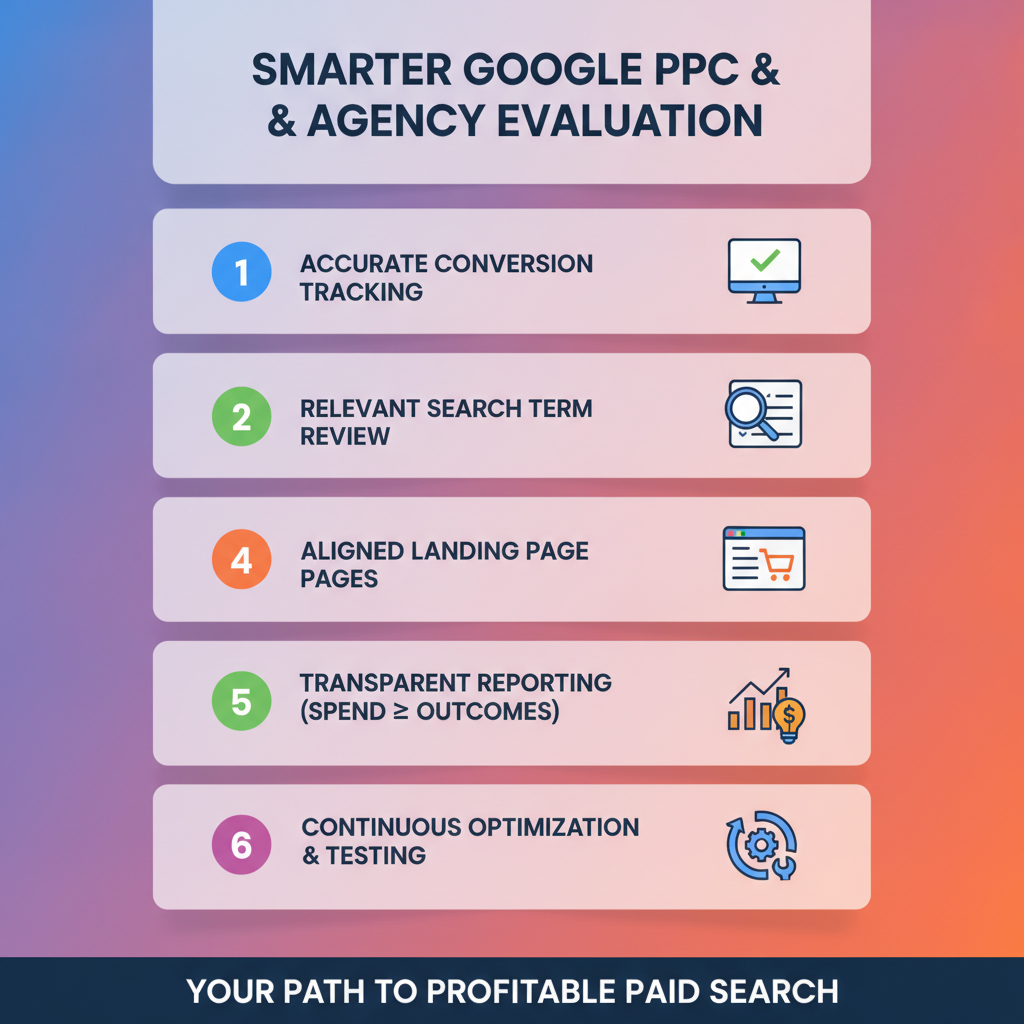
Five checks before hiring a google ppc agency for a floral brand
Step 1: Ask how conversion tracking is validated
Tracking is the foundation of PPC decisions. A flower shop may receive phone calls, online purchases, delivery orders, quote forms, and wedding consultation requests. Each action should be tracked properly so the agency can see which campaigns produce meaningful outcomes.
What to ask: Which conversions are counted, how are they tested, and how are duplicate or low-value actions filtered?
Why it matters: Poor tracking can make weak campaigns look successful or hide valuable ones.
Example: A thank-you page view should not be counted repeatedly as multiple new leads if it does not represent separate enquiries.
Step 2: Review keyword intent and negative keyword strategy
Flower searches can vary widely. Some people want to buy now, some want inspiration, some want DIY instructions, and some may be looking for jobs or wholesale suppliers. A google ppc agency should separate commercial searches from low-fit traffic.
What to ask: How are match types handled, and how often are search terms reviewed?
Why it matters: A campaign can generate many clicks while still missing ready-to-buy customers.
Example: A retail florist may need to exclude searches related to free flower images, flower drawing tutorials, or florist jobs if those searches do not support sales.
Step 3: Confirm that landing pages are part of the strategy
Ads do not convert alone. The landing page must continue the promise made in the search ad. A general homepage may not be the best destination for every floral search, especially when customers have urgent or occasion-specific needs.
What to ask: Will the agency review pages, forms, calls-to-action, delivery information, and mobile experience?
Why it matters: Even well-targeted traffic can underperform if the page is vague, slow, or mismatched.
Example: “Sympathy flower delivery” traffic may perform better on a focused sympathy arrangements page than on a broad product listing.
Step 4: Look at reporting through a florist’s business lens
A useful report should help you decide what to do next. For a flower business, that may mean understanding which campaigns produce orders, which delivery areas perform well, which services generate serious enquiries, and which searches waste budget.
What to ask: Which KPIs guide optimization, and how is lead or order quality reviewed?
Why it matters: Clicks and impressions do not show whether the business received profitable or suitable enquiries.
Example: Two campaigns may produce the same number of form submissions, but one may generate better-fit wedding consultations while the other produces low-value questions.
Step 5: Ask whether PPC can be connected to SEO and website improvements
Many florists start with ads because they want faster visibility. Over time, they may also need stronger organic rankings, better category pages, local landing pages, seasonal content, and improved checkout or enquiry flow. PPC works better when these pieces support each other.
What to ask: Can the team support analytics, landing pages, content, SEO, and web updates if needed?
Why it matters: Paid traffic is more valuable when the website is built to convert visitors into customers or enquiries.
Example: A florist may use paid search for immediate Valentine’s Day traffic while building organic pages for wedding flowers, sympathy arrangements, and local delivery areas.
What experienced PPC teams often notice in floral campaigns
- Urgency changes search behavior. Someone looking for same-day flower delivery may need fast checkout, clear cutoff times, and visible service-area details.
- Occasion matters more than generic keywords. Birthday flowers, funeral flowers, wedding flowers, and anniversary bouquets should not always share the same messaging.
- Location settings can protect budget. Ads should reflect where the florist can realistically deliver, install, or consult.
- Seasonality requires planning. Campaigns for major floral holidays often need preparation before demand peaks.
- Landing page relevance can affect order confidence. Customers often want to know style, price range, delivery timing, and next steps before they act.
SEO and PPC for flower businesses: how they work together
SEO and PPC are often compared as if a business must choose one, but florists usually need them for different reasons. PPC can create quick visibility for urgent searches, seasonal promotions, and competitive services. SEO can build longer-term visibility for service pages, local delivery areas, flower care content, wedding floral information, and occasion-based searches.
For example, a florist may use PPC to appear immediately for “same-day flower delivery” while improving organic pages for “wedding florist,” “sympathy flowers,” or “flower delivery in [service area].” The paid campaign can also reveal which phrases and offers receive attention, while SEO can turn those insights into stronger long-term content.
A simple way to view the difference is this: PPC rents attention with speed and control, while SEO builds visibility over time. Many flower businesses use both, adjusting the balance based on season, competition, budget, and business goals.
When each channel tends to fit
- PPC: Useful for urgent orders, seasonal campaigns, new offers, and immediate visibility.
- SEO: Useful for long-term local search presence, service pages, educational content, and organic discovery.
- Combined strategy: Useful when a florist wants quick traffic now and stronger search visibility later.
Common PPC mistakes flower shops should avoid
One common mistake is sending all traffic to the homepage. A homepage may introduce the business, but it may not answer a specific searcher’s need. A customer looking for funeral flowers needs a different experience from someone looking for wedding installations or a birthday bouquet.
Another mistake is using broad keywords without enough negative keyword control. General flower-related terms can attract research traffic, image searches, gardening questions, DIY projects, and unrelated searches. Without routine search term reviews, a campaign can spend on visitors who were never likely to buy.
A third mistake is ignoring mobile behavior. Many floral searches happen when customers are ready to call, order, or confirm delivery quickly. If the mobile page is hard to use, the call button is difficult to find, or delivery details are unclear, paid traffic may not convert as well as expected.
Areas to review regularly
- Service area accuracy: Make sure ads appear where the business can serve customers.
- Occasion-specific pages: Match ads to the right floral category or service.
- Negative keywords: Filter searches that do not match buying intent.
- Conversion tracking: Confirm that calls, orders, and forms are measured correctly.
- Seasonal readiness: Prepare campaigns before holiday demand increases.
What shapes PPC ROI for florists
Return from PPC rarely depends on one setting. It is shaped by search intent, location targeting, ad relevance, landing page quality, conversion tracking, pricing clarity, delivery details, and follow-up speed. If one part is weak, the campaign may feel inefficient even if traffic volume looks healthy.
For flower delivery campaigns, ROI may depend heavily on checkout clarity, delivery radius, product availability, and mobile usability. For wedding florists, ROI may depend more on consultation quality, portfolio presentation, enquiry forms, and the ability to qualify leads. For event florists, the landing page may need to communicate style, scale, and process more clearly than a simple product page.
Lower cost per click is not always the main goal. Better economics often come from improved conversion rates, fewer irrelevant searches, clearer pages, and stronger lead qualification. A good google ppc agency should look at the full path from search to sale or enquiry.
How flower businesses can compete without overspending
Smaller flower shops and independent floral studios do not need to compete with every large advertiser on every search. They can often perform better by narrowing focus. A campaign for one specific service, occasion, or delivery area can be more practical than a broad campaign trying to reach everyone.
Clarity can help a florist compete. Ads should clearly state the offer, location, delivery option, or consultation purpose. Landing pages should make the next step obvious. Local trust signals, reviews, accurate business information, and a strong Google Business Profile can also support paid search performance because customers often compare options before ordering.
The main principle is alignment. The keyword, ad, landing page, offer, and follow-up process should all match the same customer need. When those pieces work together, paid search becomes easier to manage and easier to judge.
Practical ways to focus campaigns
- Separate urgent delivery from planned services: Same-day orders and wedding consultations need different campaigns.
- Use location carefully: Target realistic delivery, pickup, or consultation areas.
- Match pages to occasions: Send sympathy, birthday, wedding, and event traffic to relevant pages.
- Review search terms often: Remove low-fit traffic before it becomes a pattern.
- Connect PPC with organic visibility: Use SEO and content to support long-term floral searches.
FAQs About google ppc agency support for flower businesses
Can Google Ads work for a local flower shop?
Yes, Google Ads can be useful for local flower shops when campaigns are focused on relevant searches, accurate service areas, and clear conversion actions such as calls, online orders, or contact forms. The key is avoiding overly broad targeting.
Should a florist advertise every flower category?
Not always. It is often better to prioritize categories that match business goals, seasonal demand, delivery capacity, or higher-value services. Campaigns should be structured around intent rather than every possible product.
What should a flower business ask before hiring a google ppc agency?
Ask how the agency handles conversion tracking, keyword intent, negative keywords, landing pages, location targeting, seasonal campaigns, and reporting. You should also ask how they define a successful lead or order.
Is PPC better than SEO for florists?
PPC and SEO serve different purposes. PPC can help with immediate visibility and seasonal demand, while SEO can build long-term visibility for local searches, service pages, and educational flower content. Many florists benefit from using both.
What is a warning sign in a PPC proposal?
A warning sign is vague reporting or unclear optimization process. If the proposal does not explain how conversions are tracked, how irrelevant searches are filtered, or how landing pages are evaluated, it may not provide enough accountability.
A clearer way to judge PPC support for a floral business
Choosing a google ppc agency becomes easier when you look beyond ad jargon. The stronger signals are practical: accurate tracking, intent-based campaign structure, relevant landing pages, useful reporting, careful location targeting, and a process for ongoing improvement.
For florists, flower delivery brands, wedding floral designers, and event flower businesses, PPC should connect search demand to the right offer at the right moment. If you want a second opinion on how your Google Ads, SEO, landing pages, or analytics are working together, 📩 Ask an SEO/PPC question.
Related Topics:
- Google Ads for florists
- flower delivery PPC campaigns
- local SEO for flower shops
- wedding florist lead generation
- conversion tracking for floral websites