
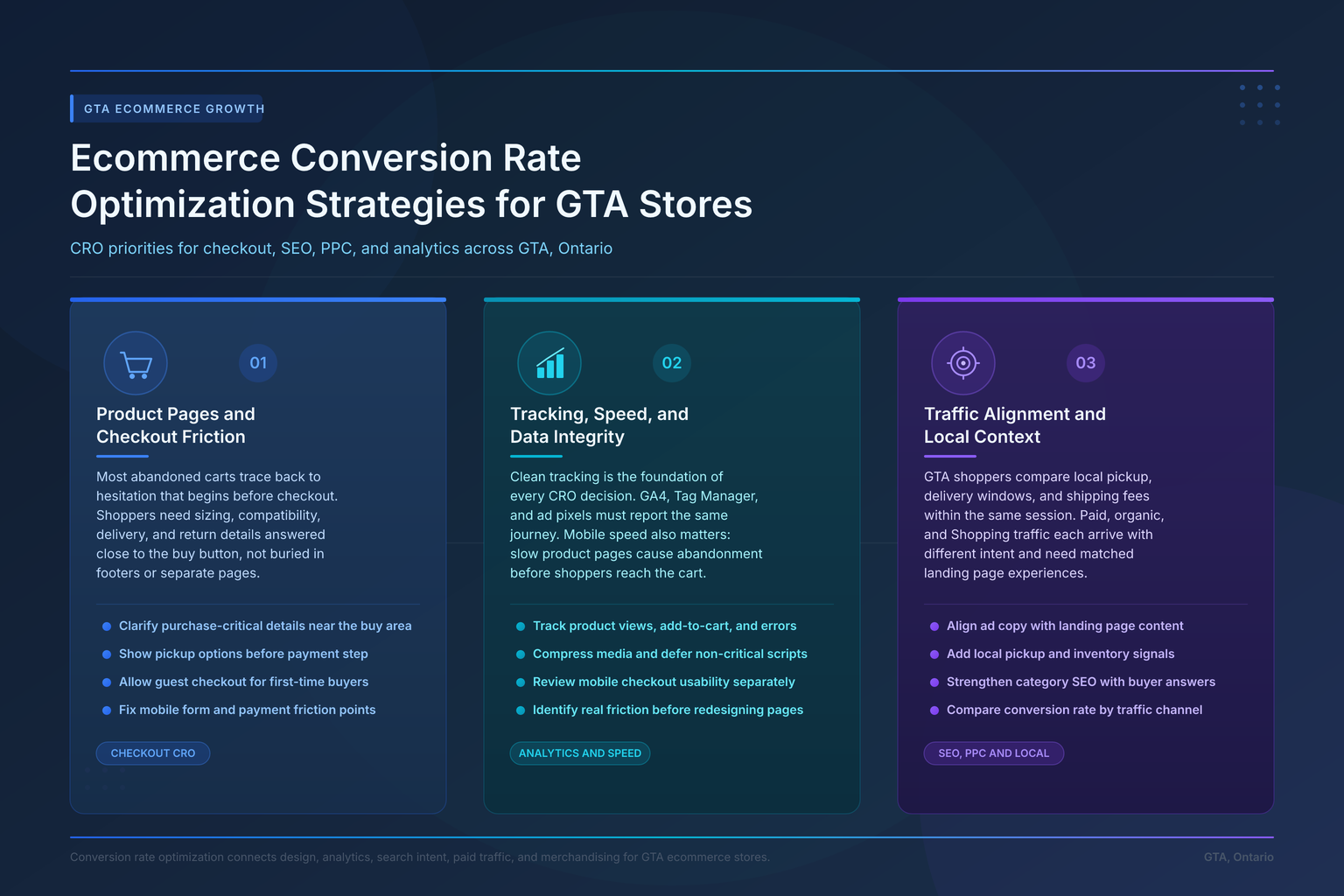
Optimizing your flower shop’s online presence to increase sales without inflating advertising budgets is essential for florists in the GTA (Greater Toronto Area). Conversion rate optimization (CRO) strategies tailored for local flower retailers focus on enhancing product pages, search and filtering options, checkout processes, site speed, trust signals, and visitor tracking to create seamless customer journeys that lead to more completed orders.
For many flower businesses using Shopify, WooCommerce, or custom e-commerce platforms, the key question isn’t just “How do we attract more visitors?” but rather, “Where are potential customers hesitating or leaving before purchasing?” Understanding this helps transform CRO from a simple design tweak into a powerful strategy for growing your floral sales. You can learn more about effective approaches in related digital marketing contexts at this detailed guide on e-commerce CRO for GTA stores.

Why Floral eCommerce CRO in the GTA Needs a Local Focus
While many general CRO tips are helpful—like simplifying forms or adding customer reviews—floral retailers in the GTA face unique shopper behaviours that demand more precise solutions. Buyers often compare not only flowers but also delivery options, pickup availability, shipping fees, and return policies.
For example, a florist in Mississauga may lose sales if their product pages don’t clearly communicate same-day delivery or local pickup options. Meanwhile, a boutique flower shop in downtown Toronto might need to provide detailed bouquet sizing and care instructions to assure first-time buyers.
Effective CRO for flower shops ties together design, analytics, search intent, paid advertising, and merchandising. That’s why it’s important to integrate these strategies alongside SEO services and paid campaign management for a holistic approach that drives real revenue growth, not just cosmetic site improvements.
What Makes Conversion Challenges Unique for GTA Flower Shops
GTA consumers often have many floral options at their fingertips during a single search—comparing delivery slots, bouquet styles, price points, and fulfillment methods. A shopper in Vaughan might prioritize options that guarantee same-day delivery, while one in Scarborough might look for easy curbside pickup or subscription plans.
Multilingual audiences, mobile-first browsing habits, and seasonal spikes (such as Valentine’s Day or Mother’s Day) also shape buying behaviours. For example, winter flower collections might need clear shipping timelines and freshness guarantees, whereas gift bouquets may benefit from inventory urgency messaging that feels natural rather than pushy.
Bringing these factors into alignment with campaign traffic from sources like Google Ads, organic listings, and social media ensures that visitors receive consistent, trustworthy experiences tailored to their local expectations. CRO bridges the gap between marketing channels and on-site experiences through smart optimization.
Common Conversion Obstacles Flower Shops Don’t Always Spot
While abandoned carts are a visible sign of lost sales, many issues start earlier—unclear bouquet details, difficult-to-use filters for flower type or price, unexpected delivery fees, or unavailable sizes. Often, product pages fail to answer critical customer questions before checkout.
An in-depth CRO audit helps separate surface symptoms from root causes. For instance, if shoppers add roses to the cart but don’t finalize payment, it may mean the page doesn’t clearly display delivery timing or care instructions, leading to last-minute doubt.
Key user engagement signals to analyze
- Product page interaction: Track how visitors scroll through bouquet descriptions, view photos, select arrangements, or use size guides to gauge whether they feel confident before adding to cart.
- Search and filtering: Analyze how effectively customers navigate categories, filter by occasion, price, flower type, or delivery date, since poor discovery can leave interested buyers frustrated.
- Checkout hurdles: Identify at what step visitors leave—whether during payment, shipping choices, or promo code entry—to target fixes precisely.
- Traffic quality: Compare conversions from organic searches, paid ads, social media, and email campaigns, as each source might require distinct landing page adjustments.
Prioritizing CRO Fixes for Your Flower Store
Not all changes bring equal returns. Prioritize optimizations based on where you have high traffic, significant lost revenue, manageable implementation efforts, and clear evidence they’ll ease customer hesitation.
Product Page Improvements
A) Provide critical purchase details upfront: Give customers clear info on bouquet size, flower freshness, materials used, delivery options, returns, and availability right next to the buy button.
- How: Add concise notes near the purchase controls so shoppers don’t need to hunt for details.
- Best for: Shops with decent traffic but low add-to-cart rates on high-interest pages.
- Example: A Toronto florist might include vase dimensions, seasonal flower substitutions, and delivery cut-off times beside bouquet selectors.
B) Upgrade product imagery: Quality photos help customers visualize bouquets and confirm style before ordering.
- How: Use multiple angles, close-ups, and scale references so buyers know exactly what they’ll receive.
- Best for: Stores where visitors view products but hesitate to engage further.
- Example: A flower shop could include images of bouquets in different room settings or with gift card options.
C) Add trust signals near purchase points: Display verified reviews, refund policies, and customer support contacts right beside add-to-cart buttons.
- How: Move trust elements closer to where decisions are made instead of burying them in footers.
- Best for: Shops offering premium arrangements or services where confidence matters.
- Example: Show star ratings, freshness guarantees, and same-day delivery promise near bouquet options.
Cart and Checkout Optimizations
A) Eliminate surprise fees: Clearly communicate shipping costs, taxes, handling fees, and delivery constraints before the final payment step.
- How: Show pickup locations, delivery zones, and any surcharge details upfront.
- Best for: Stores with good cart additions but low checkout conversion.
- Example: A Mississauga florist presents pickup availability for surrounding neighbourhoods early in checkout.
B) Simplify account creation: Allow guest checkout to speed up the process for first-time buyers, with account signup offered afterward.
- How: Remove mandatory login requirements to reduce friction.
- Best for: Stores attracting many new visitors from Google Ads or social campaigns.
- Example: A seasonal flower shop keeps checkout short and invites customers to join loyalty programs post-purchase.
C) Fix payment and form issues: Minimize errors related to fields, mobile device inputs, wallet payments, or address verifications.
- How: Streamline forms and offer accelerated payment options, especially for mobile shoppers.
- Best for: Shops with mobile-heavy traffic experiencing payment drop-offs.
- Example: A Shopify flower store implements Apple Pay and reduces unnecessary data fields.
Traffic and Landing Page Alignment
A) Align paid ads with buyer intent: Ensure that paid search visitors land on pages matching ad promises and product availability.
- How: Sync ad copy, product feeds, and landing pages for clarity and consistency.
- Best for: Shops working with PPC agencies or managing Google Ads campaigns locally.
- Example: A florist running ads for “Mother’s Day Roses” directs customers to pre-filtered category pages.
B) Boost organic landing pages: Enhance SEO-driven pages with rich content, reviews, filters, and fast load times.
- How: Improve technical SEO, internal linking, and product schema to guide research-oriented shoppers.
- Best for: Flower retailers investing in long-term SEO growth.
- Example: A bouquet category page answers common questions about flower sourcing and delivery guarantees.
C) Leverage local presence for online-offline synergy: Use local inventory messaging, store pickup options, and Google Business profiles to attract nearby customers.
- How: Connect product pages with physical store details for trust and convenience.
- Best for: Hybrid flower shops that serve walk-in customers and online buyers.
- Example: A Markham florist highlights same-day pickup hours and physical shop location on bouquet pages.
Essential CRO Priorities for GTA Flower E-commerce Stores
Priority 1: Ensure accurate tracking before making changes
Before testing design or flow improvements, confirm that Google Analytics 4, Google Tag Manager, and ad pixels are properly capturing events like product views, add-to-cart actions, checkout starts, and completed purchases. Accurate data enables identifying true pain points.
Key metrics: Product interactions, cart additions, checkout engagement, sales, and traffic source quality.
Common issues: Some flower shops track sales but overlook funnel drop-offs like promo code errors or filter use.
Example: A Shopify flower store discovers strong mobile add-to-cart clicks via paid ads but low mobile checkout completion, indicating a usability issue to address.
Priority 2: Improve mobile product page speed
Most floral shoppers browse on mobile devices and decide quickly. Slow-loading images, scripts, or heavy apps can push customers away. Optimize product images, defer non-essential scripts, and streamline variant selection for a smooth experience.
Key metrics: Mobile page speed and conversion rates across variant or media-heavy pages.
Common pitfalls: Adding third-party apps for reviews or popups without testing mobile impact.
Example: A Toronto flower retailer compresses bouquet photos and minimizes scripts to speed mobile loads before expanding features.
Priority 3: Answer common flower-buying questions clearly on product pages
Effective product pages reduce buyer uncertainty by answering questions about flower types, sizes, delivery times, freshness, care instructions, stock status, and return policies right where decisions happen.
Key metrics: Add-to-cart rate, scroll depth, interactions with size or bouquet options.
Common miss: Beautiful descriptions that omit practical details shoppers care about when comparing similar bouquets.
Example: A GTA florist might list stem counts, vase size, seasonal substitutions, and delivery cut-offs near reviews for easy reference.
Priority 4: Connect PPC, SEO, and landing page content strategically
Shoppers’ needs vary by traffic source. Paid search visitors usually seek specific bouquets and expect quick purchase options, whereas organic visitors may want to browse occasions or flower types first. Align messaging and landing pages accordingly.
Key metrics: Conversion rates, revenue per visitor, bounce rates, and assisted conversions by channel.
Common mismatches: Generic landing pages serving diverse traffic with different intents.
Example: A digital marketing audit finds that paid campaigns perform better with filtered category landing pages, while organic traffic converts more with comprehensive bouquet guides.
Priority 5: Build trust and clarity into checkout
Checkout should reinforce buyer confidence with transparent delivery dates, return policies, payment options, and customer support info before payment entry.
Key metrics: Checkout initiations, shipping step exits, payment drop-offs, and recovery rates.
Common gaps: Trust badges without clarifying delivery or pickup terms insufficiently reduce abandonment.
Example: A GTA flower shop highlights local pickup hours, contact info, and fresher flower guarantees right before payment instead of hiding policies in footers.
Choosing a Digital Partner Specialized in Floral CRO
A knowledgeable agency understands how CRO integrates with traffic acquisition, data analysis, merchandising, and technical development. Avoid agencies that treat CRO as only a visual redesign—look for partners who base decisions on actual visitor behaviour and revenue impact.
For flower retailers in the GTA searching for digital marketing or web design services, it’s vital to select a partner who can diagnose conversion friction, prioritize impactful tests, and connect CRO efforts with meaningful business results.
Zigma Internet Marketing offers deep experience with e-commerce SEO, PPC, Shopify, WordPress development, analytics, and conversion-focused content—all tailored to increase sales efficiently in competitive local markets.
Questions to Ask Potential CRO Partners
- Tracking Setup: Do they audit GA4, Google Tag Manager, and ad pixels before recommending changes?
- Implementation Ability: Can they apply improvements on your Shopify or WooCommerce site without vague suggestions?
- Channel Strategy: How do they vary CRO tactics for SEO, paid search, email, and social traffic?
- Reporting Transparency: Do their reports link conversion metrics directly to revenue, orders, or cost efficiency?
Maximizing ROI for Floral E-commerce Campaigns
ROI depends on more than just ad budgets. Margins, average order size, repeat orders, shipping complexity, page relevance, and checkout ease all shape sustainable growth.
For florists investing in content marketing, social ads, or paid search, CRO ensures that each visitor lands on optimized pages ready to convert, rather than amplifying friction points with more traffic.
Key Factors Influencing Floral Campaign ROI
- Traffic Intent: Visitors searching specific bouquets are closer to buying than those browsing general flower guides.
- Landing Page Relevance: Your page should reflect exactly what ads or emails promise to prevent visitor confusion.
- Average Order Value: Encouraging add-ons like vases, chocolates, or greeting cards increases revenue without alienating buyers.
- Repeat Purchase Motivation: Loyalty programs, replenishment reminders, and post-purchase care boost lifetime value.
How SEO and PPC Collaborate in Floral CRO
Both SEO and PPC contribute uniquely to CRO insights. PPC offers quick feedback on ad messaging, query intent, and landing page alignment, while SEO tracks category and product page performance over time.
Flower shops in the GTA should avoid siloing these channels. For example, a successful paid search landing page might inspire organic page updates. Conversely, a strong SEO page can serve as a more effective ad destination than a generic homepage.
The practical approach is to identify which channel reveals the next biggest conversion barrier and optimize iteratively to scale your flower business effectively.
How Different Channels Guide CRO
- SEO: Refine category structures, internal links, schema markup, and technical SEO to support research-driven shoppers.
- PPC: Use paid data to test offers, messaging clarity, landing page fit, and product feed accuracy.
- Email: Analyze email flows for repeat purchase triggers, cart reminders, and educational content.
- Social Media: Test audience-specific creatives and address product objections with targeted campaigns.
How GTA Flower Shops Can Compete Online Without Overspending
Local florists don’t need to dominate every search or outbid national players. Instead, focus on creating product pages that quickly address buyers’ questions, showcase availability clearly, and simplify the path to purchase.
A Mississauga flower shop might win by highlighting local same-day delivery or pickup convenience. A Toronto boutique can excel through compelling bouquet photography and simplified mobile checkout. Markham retailers can leverage local inventory cues and store trust signals to stand out.
Combining digital marketing services with CRO, analytics, and website development ensures your store is ready to convert the traffic you work hard to attract.
Visible Competitive Advantages for Floral Websites
- Clear delivery and pickup options: Customers want to know if same-day delivery or local pickup is available before starting checkout.
- Helpful product information: Answer key questions about bouquet composition, care, and returns beyond just describing the flowers.
- Fast mobile experience: Ensure images load quickly, navigation is easy, and checkout steps are minimal on phones.
- Trusted local signals: Highlight store location, hours, customer reviews, and support availability to build confidence.
Partnering with Zigma Internet Marketing for Flower CRO
Based in Markham and serving the Toronto area, Zigma Internet Marketing specializes in supporting floral and other e-commerce brands through SEO, PPC, Shopify and WordPress development, product feed optimization, analytics setup, and conversion-focused content.
Zigma’s approach links CRO efforts closely with marketing channels and the full customer journey—recommending targeted fixes from checkout improvements and product page rewrites to optimized Google Shopping feeds and paid search landing page tests.
With Google Partner-certified expertise and a full-service execution model, Zigma focuses on meaningful results—sales, orders, calls, and efficient acquisition—not just looks.
Ready to Grow Your Flower Shop’s Online Sales?
Contact Zigma Internet Marketing for expert help with tracking, SEO, PPC, landing pages, and checkout enhancements designed for your floral e-commerce goals. Reach out at (647) 556-6071 or [email protected].
FAQs About Floral eCommerce Conversion Optimization in the GTA
Review CRO once sufficient traffic and transaction data exist to identify hesitation points. For GTA flower retailers, early reviews are particularly useful when local pickup options, paid campaigns, or seasonal demand are driving qualified traffic.
Focus first on top categories, featured bouquets, search results, filters, cart, and checkout pages—prioritized by traffic, revenue opportunities, and user drop-off data.
CRO can distinguish whether poor sales stem from site experience or misaligned traffic. Fixing mismatched ads, broad keywords, or incomplete product feeds may be necessary before CRO changes yield gains.
Yes, as default themes and apps rarely solve unique local concerns like delivery clarity, freshness guarantees, or same-day pickup messaging. Custom CRO tailored to the floral market and region improves results.
SEO drives qualified organic visitors to your bouquet and category pages, while CRO streamlines the path from landing to purchase, aligning your site with shopper intent to maximize sales.
Related Topics:
