
A quick answer for flower businesses comparing marketing agencies
The best marketing agencies for flower shops, florists, floral designers, and online flower delivery brands are the ones that understand both digital performance and the seasonal nature of the floral industry. A strong agency should be able to connect search visibility, paid advertising, website experience, conversion tracking, and local discovery to real business goals such as bouquet orders, wedding consultations, sympathy arrangement requests, subscriptions, and corporate floral accounts.
If you are starting your research, this original guide on best marketing agencies and how to choose one wisely outlines the broader decision-making process. For a flower business, the same principles apply, but the agency also needs to understand urgency, gifting intent, delivery areas, product freshness, seasonal peaks, and the emotional reasons people buy flowers.
Many florists begin by reviewing a provider’s Digital Marketing Services before deciding whether they need SEO, paid ads, website improvements, local search support, or a more complete marketing strategy. That first step helps separate agencies that offer isolated tactics from those that can build a connected plan.
What separates the best marketing agencies for florists from average ones
Flower marketing is not only about making arrangements look beautiful online. It is also about being visible at the exact moment someone searches for “same-day flower delivery,” “wedding florist,” “sympathy flowers,” “Valentine’s Day roses,” or “birthday bouquet near me.” The best marketing agencies understand how search intent changes depending on the occasion, timeline, and location.
An average agency may focus on attractive social posts or broad brand awareness. A stronger agency will look at the full customer journey: how people discover the florist, whether product pages are easy to browse, how fast the checkout process works, whether delivery areas are clear, and whether calls, forms, and online orders are tracked properly.
For example, a florist may hire a digital marketing agency Toronto partner to generate more website traffic, but the real issue might be unclear delivery information, slow mobile pages, weak local SEO, or incomplete conversion tracking. More traffic will not solve those problems unless the agency can identify and improve the full path from search to order.
A team offering SEO Services should be able to explain how organic search can support flower categories, occasion-based pages, local delivery pages, and long-term visibility. That clarity is often a sign that the agency is thinking strategically rather than selling a generic package.
How agency fit changes for flower shops and floral brands
Florists operate in a market where timing matters. A customer ordering sympathy flowers may need fast service and clear delivery options. A wedding client may research months in advance and compare portfolios, pricing guidance, and consultation options. A corporate client may care about reliability, invoicing, and recurring arrangements. Each audience requires a different marketing approach.
That is why the best marketing agencies for flower businesses do not rely on one campaign template. They consider product type, service area, seasonality, profit margins, delivery logistics, and customer intent. A local flower shop may need Google Business Profile optimization and local SEO. A floral studio may need portfolio-focused content and inquiry generation. An online flower delivery brand may need product feed work, landing page optimization, and paid search structure.
For companies balancing short-term orders with long-term growth, it can help to work with an agency that understands both organic visibility and paid campaigns. A provider that manages Google Ads Management alongside SEO can often make better recommendations about when to invest in immediate traffic and when to build lasting search presence.
Comparing agency types for a flower business
Not every agency is built for the same kind of florist. The best marketing agency is usually the one that fits your current stage, internal resources, and growth goals.
Service scope
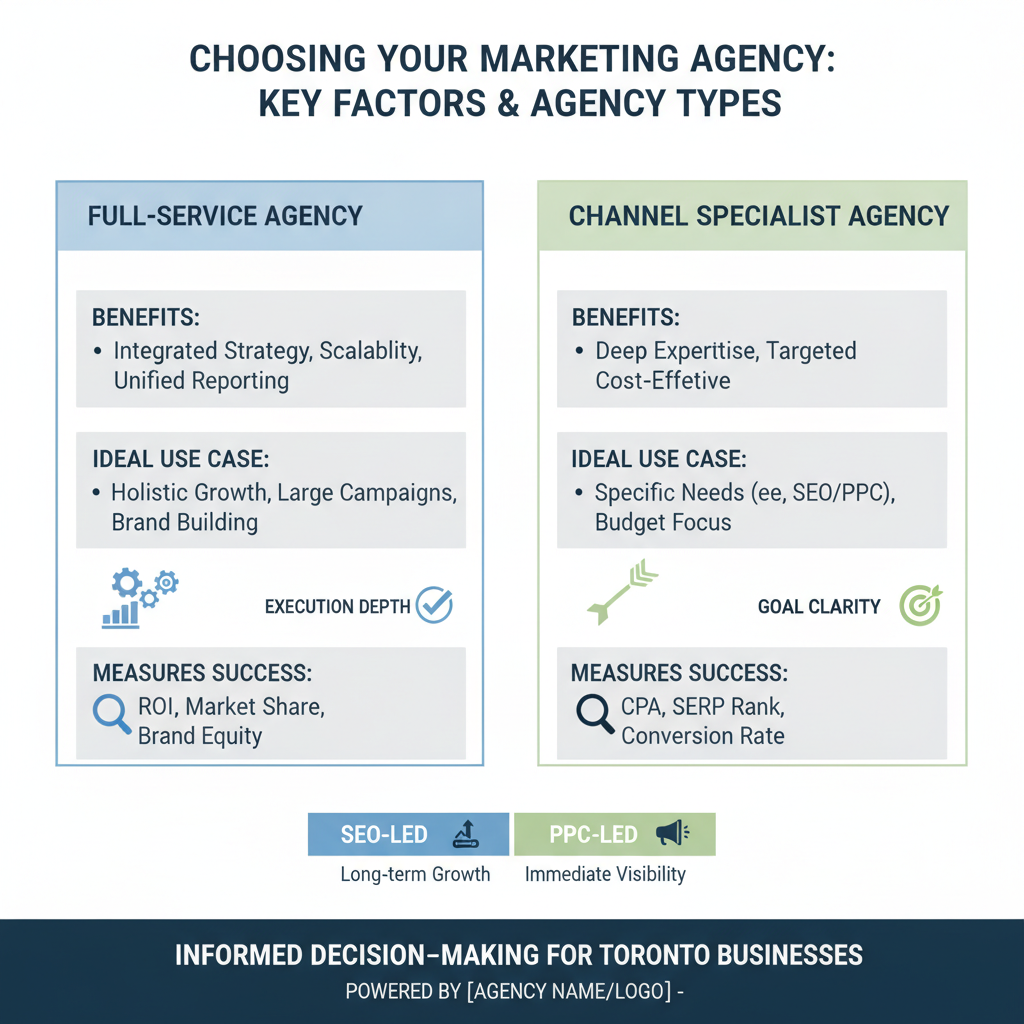
Full-service marketing agency: A full-service team manages several channels under one coordinated plan.
- How it works: SEO, PPC, website improvements, content, reporting, and conversion tracking are connected through one strategy.
- Best fit: Florists that need support with multiple areas, such as local rankings, online orders, landing pages, and paid campaigns.
- Example: A flower shop wanting to grow same-day delivery orders while also building visibility for weddings and events.
Channel specialist: A specialist focuses deeply on one marketing discipline.
- How it works: The agency concentrates on one area such as SEO services, Google Ads management, content, or analytics.
- Best fit: Floral businesses that already have internal support but need help with one clear bottleneck.
- Example: A florist with a strong website but poor organic rankings hiring a technical SEO partner.
Creative-first agency: A creative-led firm focuses on branding, visuals, photography direction, and campaign concepts.
- How it works: Visual identity, messaging, and campaign assets are prioritized, sometimes before direct-response optimization.
- Best fit: Floral studios preparing a rebrand, premium positioning, or new collection launch.
- Example: A wedding florist refreshing its portfolio presentation before increasing ad spend.
Lead generation approach
SEO-led agency: An SEO-led partner focuses on organic discovery and long-term search visibility.
- How it works: The agency improves technical structure, local pages, product category content, occasion pages, and authority signals.
- Best fit: Florists that want durable visibility for searches like flower delivery, wedding florist, funeral flowers, and seasonal bouquets.
- Example: A local flower shop building search presence across nearby neighbourhoods and delivery areas.
PPC-led agency: A PPC agency focuses on faster traffic and immediate demand capture.
- How it works: Paid search campaigns target high-intent queries, supported by relevant landing pages and conversion tracking.
- Best fit: Florists preparing for seasonal peaks or testing demand for new services.
- Example: A shop promoting Valentine’s Day roses, Mother’s Day arrangements, or same-day delivery during high-demand periods.
Hybrid performance agency: A hybrid team uses both SEO and paid advertising.
- How it works: Paid campaigns support near-term order volume while SEO builds longer-term visibility.
- Best fit: Flower businesses that need immediate sales without becoming fully dependent on advertising spend.
- Example: A florist using PPC for holiday campaigns while building organic rankings for evergreen bouquet and delivery searches.
Website and measurement capability
Media-only agency: Some agencies run ads or SEO but do not improve the website itself.
- How it works: The agency drives traffic while another vendor handles design, checkout, product pages, and technical changes.
- Best fit: Florists with a strong internal website or e-commerce team.
- Example: An established online flower shop that only needs paid search management.
Performance and web agency: These agencies combine traffic growth with site improvements.
- How it works: Campaigns, landing pages, technical fixes, calls to action, and tracking are managed together.
- Best fit: Flower businesses whose growth is limited by both visibility and website conversion issues.
- Example: A florist needing clearer product pages, faster mobile performance, and better checkout paths.
Reporting-first consultancy: Some teams focus primarily on measurement, audits, and marketing oversight.
- How it works: They review analytics, validate conversion tracking, build dashboards, and help evaluate existing vendors.
- Best fit: Florists already spending on ads or SEO but unsure which efforts are generating orders or inquiries.
- Example: A multi-location flower brand cleaning up analytics before increasing marketing investment.
How to choose the right marketing agency for a florist
Start with the business problem rather than the marketing channel. If your shop receives traffic but few orders, the issue may be product presentation, pricing clarity, delivery information, or checkout friction. If your website barely appears in search, SEO may be the priority. If you need immediate orders during a seasonal rush, paid search may be more urgent.
A good agency conversation should begin with practical questions about your flower business. Which products or services are most important to grow? Do you depend on local delivery, event bookings, subscriptions, or walk-in traffic? Are your highest-value customers buying for weddings, corporate spaces, sympathy occasions, or everyday gifting?
When comparing proposals, use these checkpoints:
- Goal clarity: The agency should define whether success means online bouquet orders, calls, wedding inquiries, event consultations, subscriptions, or in-store visits.
- Channel fit: Recommendations should explain why SEO, PPC, local search, content, or website optimization is the right starting point.
- Seasonal planning: Flower marketing should account for major occasions such as Valentine’s Day, Mother’s Day, weddings, graduations, and holidays.
- Tracking quality: Calls, forms, online orders, and consultation requests should be tracked before performance is judged.
- Website experience: Strong plans often include mobile speed, delivery-area clarity, product page improvements, and stronger calls to action.
- Communication style: Clear explanations are usually more useful than vague promises about growth or visibility.
What impacts ROI for flower marketing campaigns
Return on investment in floral marketing is shaped by more than ad clicks or rankings. Search intent, product margins, delivery fees, page speed, checkout experience, photography quality, review signals, and follow-up speed can all affect whether marketing turns into profitable orders.
Two flower shops can spend the same amount on paid search and see very different outcomes. One may send customers to a focused same-day delivery page with clear pricing, strong bouquet images, and simple checkout. Another may send traffic to a generic homepage where customers must search for delivery information. The spend is similar, but the buying experience is not.
Agencies that improve ROI usually look at the whole system around the campaign. That means not only targeting keywords, but also improving landing page relevance, tracking order sources, clarifying delivery options, and aligning content with what customers are actually searching for.
- Search intent alignment: “Wedding florist” and “same-day roses near me” require very different pages and calls to action.
- Landing page relevance: A focused occasion or delivery page can reduce friction compared with a general homepage.
- Tracking accuracy: If calls, forms, and online orders are not measured properly, budget decisions become guesswork.
- Mobile usability: Many flower purchases happen quickly, so slow or confusing mobile pages can reduce conversions.
- Offer clarity: Customers should quickly understand delivery timing, service areas, bouquet options, and next steps.
SEO vs PPC for florists: when to use each strategy
SEO and PPC solve different timing problems for flower businesses. SEO is usually better for long-term visibility across service pages, product categories, occasion-based searches, and local delivery areas. PPC is usually better for immediate visibility, seasonal campaigns, and testing demand for specific offers.
If a florist has little search presence but needs orders quickly, PPC can create immediate traffic for high-intent searches. If the same florist wants to reduce reliance on continuous ad spend, SEO should be built alongside paid campaigns. The strongest strategy is often not choosing one permanently, but sequencing both based on business priorities.
- Use SEO first: When your site has useful products and services but weak organic visibility.
- Use PPC first: When you need fast traffic for a seasonal promotion, new delivery area, or urgent sales period.
- Use both together: When short-term order volume and long-term search visibility both matter.
How local flower shops can compete online
Local florists often compete against marketplaces, large delivery networks, grocery stores, and nearby independent shops. The advantage for a local flower business is relevance. A well-optimized local florist can show customers clear delivery areas, fresh designs, personal service, pickup options, and local expertise.
Local search is especially important for searches tied to urgency. Customers looking for “flowers near me,” “same-day flower delivery,” or “funeral flowers in Toronto” often want a nearby provider they can trust quickly. Agencies that understand local SEO, Google Business Profile optimization, service-area content, and review signals are usually better equipped to help florists compete.
- Build service-area relevance: Pages should reflect the neighbourhoods, cities, or delivery zones the florist actually serves.
- Improve local conversion signals: Clear contact details, delivery information, reviews, and calls to action support more inquiries.
- Create occasion-based content: Weddings, sympathy flowers, birthdays, anniversaries, and corporate florals each deserve specific messaging.
- Support rankings with site quality: Technical SEO, page speed, structured content, and mobile usability still matter.
- Track lead and order sources: Florists should know whether orders come from SEO, PPC, maps, social media, referrals, or direct traffic.
Agency quality shows up in the process
Most flower business owners do not need to become digital marketing experts. They do, however, need enough clarity to recognize whether an agency has a real process. If an agency cannot explain how it audits your current performance, identifies growth opportunities, and measures results, the relationship may become a list of monthly activities rather than a path toward meaningful improvement.
Strong agencies usually define conversion goals early, separate traffic volume from order quality, discuss implementation details, and point out practical limits. Those limits may include weak photography, slow website pages, unclear delivery rules, incomplete tracking, or product pages that do not answer customer questions.
For florists, that process matters because marketing is closely tied to operations. A campaign may generate demand, but the website, delivery workflow, product availability, and response time all influence whether that demand becomes revenue.
FAQs about the best marketing agencies for flower businesses
How can a florist tell if an agency is results-focused?
A results-focused agency connects its work to specific outcomes such as online flower orders, phone calls, wedding inquiries, consultation bookings, or subscription requests. Reporting should go beyond impressions and clicks.
Should a flower shop hire a specialist or a full-service agency?
It depends on the bottleneck. A specialist may be useful if you only need SEO, PPC, or analytics support. A full-service agency may be better if your website, ads, local search, content, and tracking all need to work together.
Is SEO important for florists?
Yes. SEO can help florists appear for local delivery searches, wedding florist searches, occasion-based bouquet searches, and informational queries that support future customers.
When should a florist use paid ads?
Paid ads can be useful when speed matters, such as seasonal promotions, same-day delivery campaigns, new product launches, or testing demand in a new service area.
What should a florist ask before signing with a marketing agency?
Ask how success will be measured, which services are handled in-house, how seasonal campaigns are planned, what tracking will be used, and how the agency will improve both traffic and conversions.
A practical final takeaway
The best marketing agencies for flower businesses are not defined by large service lists or polished sales language. They are defined by fit, clarity, and execution. A good agency should understand how people buy flowers, how local and seasonal search demand works, and how to turn visibility into measurable orders or inquiries.
For florists and flower brands that want support with SEO, PPC, conversion optimization, web improvements, or lead generation strategy, Zigma Internet Marketing offers full-service digital marketing support and KPI-focused reporting. If you would like tailored advice, you can Book a Free Strategy Call.