
What flower businesses can learn from an HVAC marketing agency approach to lead quality
Flower shops, wedding florists, event floral studios, and local delivery florists all depend on the same basic marketing outcome: attracting enquiries that can become real orders, consultations, subscriptions, or repeat customers. That is why the lead-quality thinking used by an HVAC marketing agency can be useful far beyond heating and cooling. The goal is not just more website visits. The goal is to know which searches, ads, pages, calls, and forms are producing enquiries your team can actually serve.
For readers comparing specialist service-business marketing models, this HVAC marketing agency guidance for better lead quality explains how campaigns should connect traffic to calls, forms, booked visits, and sales outcomes. Floral businesses can apply the same principle by separating same-day delivery leads, wedding consultations, sympathy flower orders, corporate floral accounts, and subscription enquiries instead of treating every website conversion as equal.
A flower website may receive traffic from people browsing rose meanings, comparing bridal bouquet styles, looking for funeral arrangements, or urgently searching for same-day flower delivery. Those visitors have very different levels of intent. A strong marketing plan should help identify which enquiries are ready to buy, which need nurturing, and which are unlikely to fit the shop’s service area, budget, or availability.
Why lead quality matters for florists and HVAC companies alike
At first, florists and HVAC contractors may seem unrelated. One sells beauty, emotion, celebration, and care. The other solves comfort, repair, and equipment problems. But both are local service businesses that rely on timing, trust, service area clarity, and fast response.
An emergency furnace repair search and a same-day flower delivery search both carry urgency. A planned air conditioner replacement and a wedding floral consultation both involve comparison, budget review, and a longer decision path. A maintenance plan and a weekly office flower subscription both depend on repeat value and follow-up.
That is why marketing channels such as SEO Services, paid search, website design, content strategy, and analytics should not operate separately. Search visibility may help a flower shop earn steady traffic for bouquet categories and occasion pages, while paid campaigns can support seasonal demand around Valentine’s Day, Mother’s Day, weddings, sympathy flowers, or local delivery searches.
How to separate useful floral leads from noisy enquiries
A florist does not benefit equally from every enquiry. A form asking for a large wedding installation is different from a last-minute delivery outside the shop’s area. A corporate account request is different from a person asking for free flower-care advice. Tracking these differences helps owners decide where to invest time and marketing budget.
Useful lead evaluation for a flower business often includes:
- Occasion type: Same-day delivery, weddings, sympathy flowers, events, subscriptions, and corporate gifting should be tracked separately because each has a different process and value.
- Lead source: Organic search, paid search, social media, email, referrals, and repeat visitors should be connected to calls, forms, and orders where possible.
- Service area fit: Delivery enquiries outside the florist’s location range can inflate lead volume without improving sales.
- Contact quality: Missed calls, incomplete forms, vague event requests, duplicate submissions, and unrealistic timelines can reveal where the website or intake process needs improvement.
- Order progression: A lead that becomes a paid order, consultation, event proposal, or recurring account gives better feedback than a raw enquiry count.
The better question is not simply, “How many leads did the flower website receive?” A more useful question is, “Which campaigns created enquiries we could respond to, fulfill, and profitably serve?”
SEO, PPC, and CRO lessons flower shops can borrow from HVAC marketing
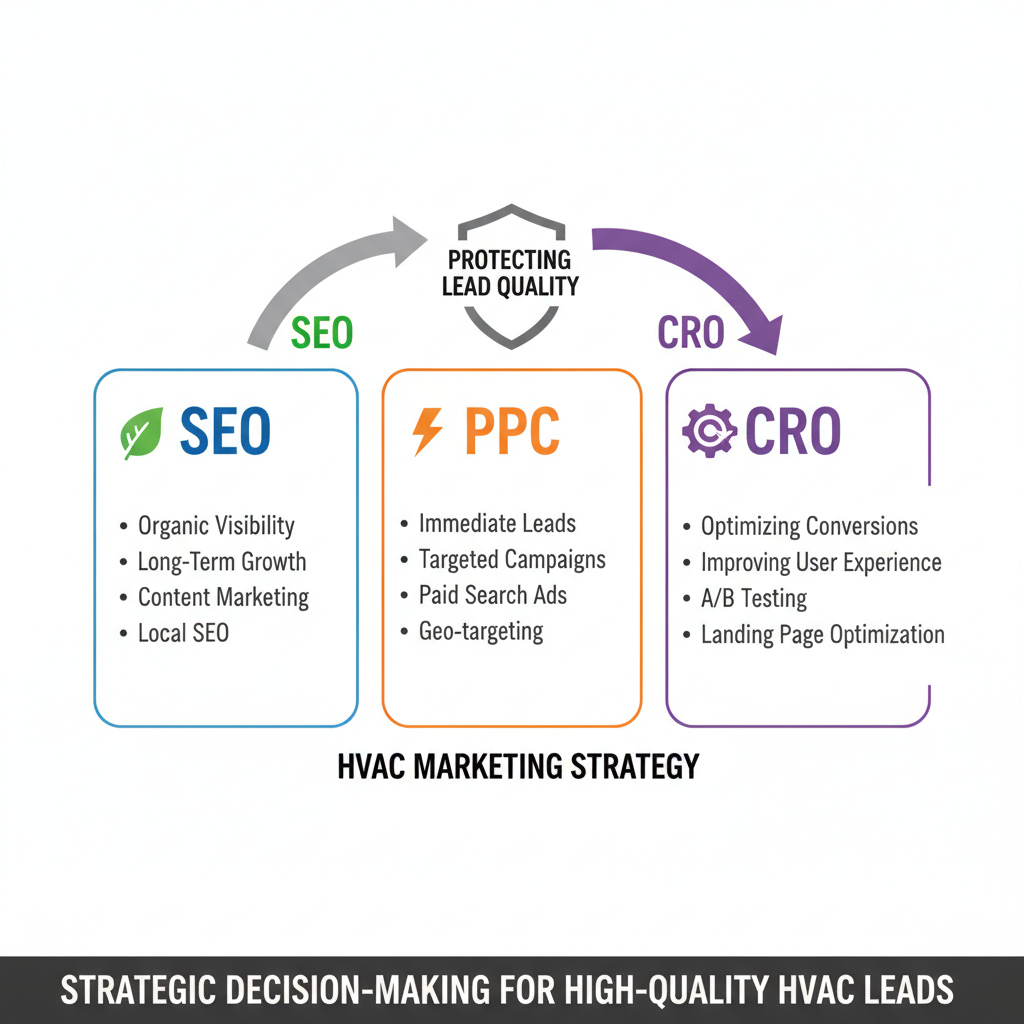
Search engine optimization, pay-per-click advertising, and conversion rate optimization each play a different role in a local lead-generation system. The same is true whether the business sells furnace repair, bridal bouquets, or fresh flower delivery.
SEO for long-term floral visibility
A) Occasion and service pages: These pages help search engines and customers understand what the florist offers.
- How it works: Each page focuses on a specific need, such as wedding flowers, funeral flowers, birthday bouquets, anniversary arrangements, or corporate flower delivery.
- Best fit: SEO fits flower businesses that want steady, non-paid discovery for their most important services.
- Example: A wedding flowers page can explain consultation steps, seasonal flower choices, design style, delivery options, and contact paths.
B) Educational floral content: Articles and guides can support shoppers before they are ready to order.
- How it works: Content answers questions about bouquet care, flower meanings, seasonal availability, event planning, and sympathy etiquette.
- Best fit: Educational content works well for florists with wedding, event, subscription, or premium arrangement services.
- Example: A guide to seasonal wedding flowers can help couples understand options before requesting a consultation.
C) Technical SEO: Technical SEO supports crawlability, page speed, site structure, indexation, and tracking.
- How it works: The website is reviewed for slow templates, duplicate pages, broken links, weak internal linking, and missing conversion tracking.
- Best fit: Technical SEO is useful for floral websites with many product categories, occasion pages, blog posts, or delivery-location pages.
- Example: Improving internal links between “same-day flowers,” “birthday flowers,” and local delivery pages can help customers and search engines find the right page faster.
PPC for seasonal and urgent flower demand
A) Search ads: Search ads can capture shoppers actively looking for a florist right now.
- How it works: Campaigns target selected search terms, locations, devices, schedules, and landing pages with conversion tracking attached.
- Best fit: Paid search can support same-day delivery, holiday promotions, event consultations, or high-priority floral services.
- Example: A florist can separate “same-day flower delivery” from “wedding florist” so ads, landing pages, and forms match the customer’s intent.
B) Remarketing: Remarketing keeps the flower brand visible after someone visits the website but does not immediately order.
- How it works: Ads can be shown to past visitors based on pages viewed or audience rules.
- Best fit: Remarketing may fit wedding flowers, event florals, subscription flowers, and corporate accounts where people compare several providers.
- Example: A visitor who viewed a wedding floral gallery may later see a reminder to book a consultation.
C) Negative keyword management: Negative keywords help prevent wasted ad spend.
- How it works: Search term reports are reviewed to block irrelevant searches.
- Best fit: This matters for florists who do not want to pay for clicks from people searching for free images, artificial flowers, flower drawing tutorials, jobs, or DIY-only ideas.
- Example: Blocking terms that do not match the florist’s services can keep budget focused on real delivery, event, and order enquiries.
CRO for turning flower website visits into orders
A) Landing page testing: Landing page improvements can make it easier for visitors to order or enquire.
- How it works: Headlines, buttons, forms, product sections, trust signals, delivery details, and page layout are refined using behaviour and conversion data.
- Best fit: This helps flower businesses that already receive traffic but do not receive enough qualified orders or consultations.
- Example: A same-day delivery page may need delivery cut-off times, service area details, a clear phone number, and a simple order path near the top of the page.
B) Call tracking: Call tracking connects phone enquiries to campaigns, keywords, and pages.
- How it works: Dynamic numbers and analytics events can identify which traffic sources generate calls.
- Best fit: Call tracking is useful for florists that handle urgent orders, sympathy requests, event consultations, or custom arrangements by phone.
- Example: A paid search campaign may look costly until call tracking shows it is producing serious event consultations or high-value delivery orders.
C) Form design: Forms should balance ease with qualification.
- How it works: Fields are chosen to capture important details without discouraging serious customers.
- Best fit: Form refinement is especially useful for weddings, events, installations, corporate gifting, and subscriptions.
- Example: Asking for event date, location, occasion type, and preferred contact time can help a florist respond more efficiently.
Choosing a marketing partner: what florists can notice from HVAC agency evaluation
A capable marketing partner does not need dramatic promises to show competence. Stronger signs include clear campaign structure, accurate tracking, readable reporting, and questions that reflect how the business actually operates.
For HVAC companies, that means understanding repair, replacement, maintenance, dispatch, and seasonal demand. For flower businesses, it means understanding delivery zones, order cut-off times, seasonal availability, wedding consultation timelines, holiday rushes, sympathy-order sensitivity, and design capacity.
Useful questions to ask before hiring a marketing agency
- How will different enquiry types be tracked? Same-day delivery, weddings, events, sympathy flowers, and subscriptions should not be blended into one generic lead count.
- Which pages should be improved first? A practical answer should consider search demand, business priority, website condition, and the florist’s fulfillment capacity.
- How will wasted ad spend be reduced? Search term reviews, negative keywords, location targeting, landing page alignment, and conversion tracking should be part of the answer.
- What will reporting show beyond clicks? Useful reporting should connect spend, calls, forms, orders, consultations, and lead quality indicators.
- How will website improvements be handled? Floral marketing often needs better page speed, clearer product categories, stronger occasion pages, and easier order paths.
Zigma Internet Marketing works across SEO, PPC, web design, content, social campaigns, analytics, and dashboards. That type of connected structure can be useful for local service businesses because lead quality often depends on several fixes working together, not one channel in isolation.
What affects return from flower marketing campaigns
Return from floral marketing is shaped by more than ad spend. Website clarity, order flow, delivery limits, phone response, product photography, seasonal timing, availability, pricing structure, and follow-up can all influence the final result.
A campaign may appear strong in an ad platform while still creating operational problems. For example, ads may generate many delivery requests outside the service area, event forms without dates, or calls after the shop has stopped accepting same-day orders. In those cases, the campaign may need better scheduling, location targeting, page messaging, or form qualification.
Metrics worth reviewing together
- Cost per qualified enquiry: More useful than cost per click because it filters out low-fit traffic.
- Order or consultation rate: This shows whether enquiries are becoming meaningful business opportunities.
- Call answer rate: Missed calls can make marketing look weak even when customer demand is present.
- Conversion rate by page: Comparing wedding, delivery, sympathy, and event pages can show where visitors hesitate.
- Search term quality: Reviewing actual paid search queries helps reduce spend on irrelevant searches.
SEO vs PPC for florists using HVAC marketing logic
SEO and PPC should not be treated as rivals. SEO builds durable visibility for product categories, occasion pages, local delivery pages, and educational floral content. PPC gives faster control over which services receive visibility, when ads appear, and which landing pages receive traffic.
A florist with a weak website may need foundational SEO and conversion work before scaling ads aggressively. A shop with strong occasion pages but seasonal demand swings may use PPC to support Valentine’s Day, Mother’s Day, prom flowers, sympathy orders, or wedding consultations. The right balance depends on how urgently the business needs enquiries and how ready the website is to convert visitors.
A practical channel split
- Use SEO for durable discovery: Occasion pages, product category pages, technical fixes, content, and internal linking help the site earn search visibility over time.
- Use PPC for speed and control: Paid search can prioritize urgent delivery, seasonal campaigns, or specific floral services.
- Use CRO to protect both channels: Better page structure, buttons, forms, trust signals, and order paths improve the value of both organic and paid traffic.
For businesses comparing support models, Google Ads Management and Website Design & Development should be reviewed alongside content, SEO, and analytics. Local marketing performs better when the channel plan and website experience support the same business goal.
How flower shops can compete online without chasing every channel
Flower businesses do not need to market everywhere at once. A focused plan usually starts with the services that matter most: same-day delivery, weddings, sympathy flowers, events, corporate accounts, subscriptions, or seasonal arrangements.
A florist trying to grow wedding work may need stronger gallery pages, consultation forms, seasonal flower guides, and venue-related content. A shop trying to grow local delivery may need better location pages, clearer delivery policies, fast-loading product pages, and paid search campaigns that match urgent intent. A subscription-focused florist may need email follow-up, remarketing, and simple recurring-order messaging.
The danger is spreading effort across too many channels before the foundation is clear. Social media, search ads, SEO content, email, and landing pages can all help, but each one should have a defined role.
Focus areas for cleaner floral growth
- Service priority: Decide which floral services deserve the most visibility before building campaigns.
- Tracking accuracy: Configure analytics, call tracking, form events, and dashboard views before judging performance.
- Page-level clarity: Give each core service or occasion a page that explains options, process, delivery details, and contact paths.
- Ad query control: Review paid search terms regularly so spend is not wasted on irrelevant searches.
- Sales feedback loop: Share real customer feedback back into marketing decisions so campaigns improve based on actual conversations and orders.
Common mistakes that weaken floral lead generation
Most marketing problems are not caused by one weak ad or one underperforming page. They often come from small gaps that stack up: unclear tracking, thin service pages, slow product pages, generic ads, weak forms, and reports that do not separate enquiry types.
- Sending all ad traffic to the homepage: Visitors looking for funeral flowers, wedding flowers, or same-day delivery need pages that match their specific intent.
- Counting every form as equal: A vague enquiry should not be valued the same as a ready-to-order customer or a serious event consultation.
- Ignoring call handling: Marketing may appear weak when the real issue is missed calls, delayed replies, or unclear intake questions.
- Publishing thin occasion pages: Pages that only list products without delivery details, design options, pricing guidance, or process information may fail to convert serious customers.
- Reviewing campaigns without sales feedback: Platform data can show conversions, but the florist’s team can identify which enquiries were actually workable.
FAQs about HVAC marketing agency lessons for flower businesses
Why would a flower website discuss HVAC marketing agency strategy?
HVAC marketing offers a useful model for local lead quality. Florists can apply the same ideas by separating urgent orders, planned consultations, recurring accounts, and low-fit enquiries instead of measuring all traffic the same way.
Which floral leads should be tracked separately?
Same-day delivery, wedding flowers, sympathy arrangements, event florals, corporate gifting, and subscriptions should be tracked separately because each has a different intent, timeline, and follow-up process.
Should florists run ads before improving their website?
Ads can bring traffic quickly, but a weak website can waste that traffic. If pages load slowly, hide delivery details, or make ordering difficult, website improvements should happen before or alongside paid campaigns.
What marketing metrics should a flower shop review first?
Start with qualified enquiry volume, cost per qualified enquiry, call answer rate, order or consultation rate, conversion rate by page, and search term quality. These metrics connect marketing activity to real customer action.
Can one agency manage SEO, PPC, web design, and analytics together?
Yes, if the agency has the technical and strategic ability to connect those areas. Flower businesses often benefit when SEO, ads, landing pages, conversion tracking, and reporting are managed with shared goals.
A practical next step for stronger floral lead quality
The strongest lead-generation systems usually share the same foundation: clear service priorities, channel-specific planning, accurate tracking, and regular feedback from the people answering calls, handling orders, and booking consultations.
Whether the business is an HVAC contractor or a flower shop, better marketing starts with knowing which campaigns create real opportunities. Review your service pages, tracking setup, paid search structure, and conversion paths before spending more on traffic.
Need a clearer view of lead quality?
Ask Zigma Internet Marketing how SEO, PPC, landing pages, and analytics can work together for a more accountable lead generation system.