
For florists, flower delivery brands, wedding floral studios, and online bouquet shops, the phrase best GPT ads agency for advertising on OpenAI ChatGPT should mean more than hiring someone who talks about AI. It means finding a marketing partner that understands how people search for flowers, compare options, ask for gift ideas, and make time-sensitive buying decisions in conversational environments.
A flower customer may ask ChatGPT for “romantic anniversary flowers,” “same-day sympathy flowers near me,” “wedding bouquet ideas for a spring ceremony,” or “best flowers to send after surgery.” That type of intent is highly valuable when handled carefully. For a broader marketing perspective on choosing the best GPT ads agency for advertising on OpenAI ChatGPT, the key lesson is the same for flower businesses: strong fundamentals matter more than AI buzzwords.
The right agency should be able to connect audience research, paid media strategy, seasonal promotions, landing pages, tracking, creative testing, and conversion data. For a flower business, that means campaigns should support real outcomes such as bouquet orders, consultation requests, wedding inquiries, subscription sign-ups, phone calls, and local delivery sales.
Why GPT Advertising Matters for Florists
Flower buying is often emotional, occasion-based, and time-sensitive. Customers may not always know exactly what arrangement they want. They may begin with a situation: “I need flowers for a funeral,” “What flowers are best for Mother’s Day?” or “What should I send for a first anniversary?” Conversational AI platforms are a natural fit for these questions because users can explain context and refine their needs over several prompts.
This changes how flower advertising should be planned. A traditional search ad may target a short keyword like “flower delivery Toronto” or “wedding florist.” A GPT-style ad environment may need to respond to richer intent, such as budget, relationship, delivery timing, flower meaning, colour preference, and occasion. A strong agency should know how to turn those details into useful ad messaging and relevant landing pages.
The goal is not simply to appear in a new ad format. The goal is to guide the customer from a conversational question to a clear next step: order now, call the shop, browse arrangements, request a wedding quote, or book a floral consultation.
What a GPT Ads Agency Should Do for a Flower Business
A capable GPT ads agency should understand both paid media and the buying journey behind floral purchases. It should be able to identify the difference between someone browsing flower meanings and someone ready to order same-day delivery. Those two users need different messages, different landing pages, and different conversion goals.
For example, a person researching “best flowers for a condolence gift” may need a helpful guide and a gentle path to sympathy arrangements. A person asking “where can I order roses delivered today?” likely needs availability, delivery cut-off times, pricing, and a fast checkout or phone option. The agency should be able to build campaigns around these intent levels.
Core capabilities should include:
- Audience and occasion research: Understanding gift buyers, event planners, wedding couples, corporate clients, and local delivery customers.
- Paid media planning: Connecting GPT-focused testing with existing channels such as search, social, and remarketing.
- Landing page strategy: Creating pages for occasions such as birthdays, weddings, anniversaries, sympathy, Valentine’s Day, Mother’s Day, and seasonal collections.
- Conversion tracking: Measuring calls, forms, online orders, consultation bookings, and qualified leads.
- Creative testing: Testing messages around freshness, local delivery, arrangement style, occasion, price range, and urgency.
If an agency already understands Google Ads Management, it should be able to explain how search intent and prompt intent overlap. The platform may change, but the discipline remains similar: match the user’s need, present a relevant offer, and measure the outcome accurately.
How Flower Shops Should Evaluate a GPT Ads Agency
Before hiring an agency, flower businesses should look for operational clarity. A good agency will not promise easy results simply because AI is popular. Instead, it will explain how campaigns will be researched, launched, measured, and improved.
Ask how the agency would handle different floral buying paths. Can it separate wedding leads from same-day delivery orders? Can it build campaigns around seasonal peaks? Can it track phone calls from people who prefer to speak with a florist before ordering? Can it connect ad performance to actual sales or qualified inquiries?
For flower brands, these questions matter because floral marketing has many intent types. A customer buying a birthday bouquet behaves differently from a couple planning wedding centrepieces. A corporate client ordering weekly lobby arrangements has different needs than someone sending apology flowers. A strong agency should understand these differences before spending budget.
Useful questions to ask include:
- How will you define high-intent flower buyers?
- Which occasions should be tested first?
- How will calls, form submissions, and online orders be tracked?
- Will you create or improve landing pages for specific flower categories?
- How will GPT-focused campaigns be compared with Google Ads, SEO, and social campaigns?
- What will determine whether we scale, pause, or revise a campaign?
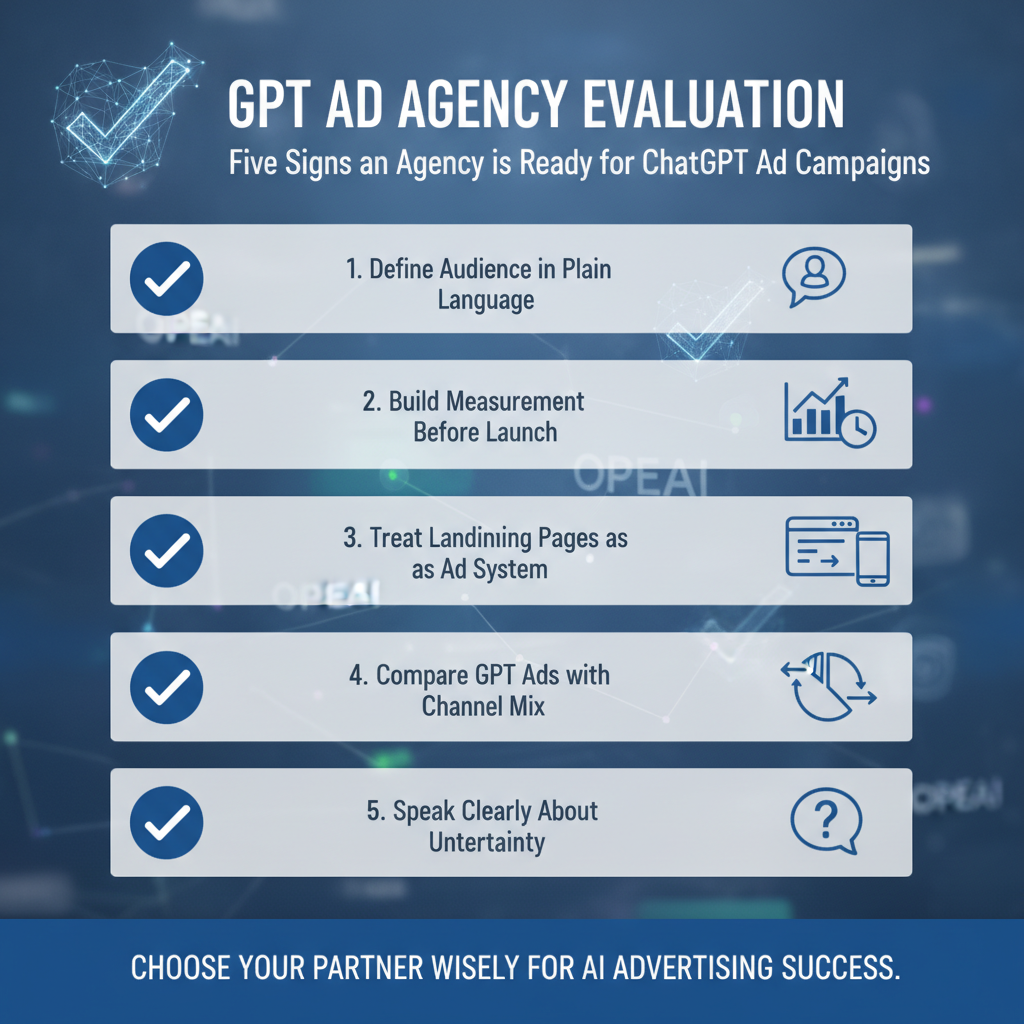
Five Signs an Agency Is Ready to Run GPT Ad Campaigns for Florists
Step 1: They Understand Flower Buyer Intent
A strong agency should be able to describe your customers in practical language. It should know the difference between a last-minute delivery customer, a wedding inquiry, a sympathy buyer, a subscription customer, and a person browsing floral inspiration.
What to look for: The agency can group campaigns by occasion, urgency, location, and order value.
Why it counts: Flower purchases are often driven by context. Better context usually leads to better messaging.
Example: A same-day rose delivery campaign should not use the same landing page as a luxury wedding floral consultation campaign.
Step 2: They Build Tracking Before Launch
Tracking must be planned before any GPT ad test begins. For florists, this may include online purchases, phone calls, wedding inquiry forms, quote requests, delivery-area searches, and consultation bookings.
What to look for: A clear plan for conversion tracking, analytics setup, call tracking, and source attribution.
Why it counts: Without clean tracking, it is difficult to know whether ads are producing real orders or just website visits.
Example: If a Mother’s Day campaign generates many calls but the calls are not tracked, the campaign may appear weaker than it actually is.
Step 3: They Treat Landing Pages as Part of the Campaign
A GPT ad may introduce the customer to your flower shop, but the landing page must complete the conversation. It should quickly answer questions about arrangement options, delivery timing, service area, pricing, and next steps.
What to look for: Experience with landing pages and conversion rate optimization.
Why it counts: Flower customers often need reassurance before ordering, especially for emotional occasions such as sympathy, weddings, or anniversaries.
Example: A sympathy flower page should feel different from a Valentine’s Day page. The tone, product selection, and call to action should match the occasion.
Step 4: They Compare GPT Ads With Existing Marketing Channels
GPT advertising should not be treated as a standalone experiment. It should be compared with channels such as paid search, organic search, social media, email, and local listings.
What to look for: Cross-channel planning that includes search engine marketing, paid social, SEO, and local campaigns.
Why it counts: A good result is not just traffic from an AI platform. It is profitable traffic compared with other ways to reach flower buyers.
Example: A local florist may need Google Ads for immediate “near me” orders while testing GPT ads for gift recommendation and occasion-based discovery.
Step 5: They Are Honest About Uncertainty
GPT advertising is still an evolving opportunity. A trustworthy agency should explain what is known, what is being tested, and what may change over time. This includes ad inventory, targeting options, reporting detail, and scale.
What to look for: Clear communication, careful testing, and reports tied to business outcomes.
Why it counts: Flower businesses often work with seasonal budgets. Overconfidence in a new channel can lead to waste.
Example: An agency that promises guaranteed order volume before testing may be selling certainty it cannot measure.
Where SEO Fits Into GPT Advertising for Flower Websites
GPT advertising may operate more like paid media, but SEO still matters. A flower website with clear service pages, helpful content, structured categories, and strong local relevance is usually in a better position to convert traffic from any source.
For florists, useful SEO work may include pages for local flower delivery, wedding flowers, sympathy arrangements, corporate flowers, event florals, seasonal collections, and flower care guides. These pages can support both organic visibility and paid campaign performance because they help users find answers quickly.
Businesses that invest in SEO Services can often build a stronger base for future AI discovery. Paid campaigns may bring visitors in, but the website must still explain the offer, build trust, and make ordering simple.
Why Landing Pages Are Critical for Floral Campaigns
A flower ad can attract attention, but the landing page determines whether the visitor becomes a customer. This is especially important for GPT-style traffic because users may arrive with a detailed question already in mind.
Strong flower landing pages should usually include:
- Clear occasion or service focus
- Product examples or arrangement categories
- Delivery area and timing details
- Simple ordering or inquiry options
- Trust signals such as shop information, policies, or service details
- Mobile-friendly design for fast ordering
If your agency understands Website Design & Development, it can improve the post-click experience instead of blaming poor results on the ad platform. This is important for flower shops because many customers are ordering on a deadline and may leave quickly if the page is slow, confusing, or incomplete.
How Local Florists Can Test GPT Ads Without Wasting Budget
Local flower shops do not need to test every emerging ad opportunity at once. A more practical approach is to begin with strong basics: local SEO, Google Business Profile visibility, paid search for high-intent terms, clear delivery pages, and accurate conversion tracking.
Once those pieces are working, GPT advertising can be tested around specific use cases. For example, a florist might test gift recommendation prompts, wedding floral consultation inquiries, seasonal bouquet discovery, or sympathy flower guidance. Starting with defined goals helps prevent vague spending.
Good early testing areas may include:
- Same-day flower delivery: For users with immediate purchase intent.
- Wedding flowers: For users comparing styles, budgets, and consultation options.
- Sympathy arrangements: For users needing thoughtful guidance and fast support.
- Seasonal holidays: For Mother’s Day, Valentine’s Day, Christmas, spring flowers, and other peak periods.
- Corporate flowers: For offices, hotels, restaurants, and recurring arrangements.
The best agency should help decide which of these opportunities is worth testing first based on your margins, capacity, delivery area, and existing marketing performance.
What Impacts ROI in Flower Advertising Campaigns
Return on ad spend is not determined by the platform alone. For flower businesses, ROI is shaped by product appeal, delivery reliability, local relevance, landing page quality, pricing clarity, seasonal timing, and follow-up speed.
Three patterns are especially important. First, campaigns perform better when the offer is specific. “Order same-day birthday flowers” is clearer than a broad message like “beautiful flowers for every occasion.” Second, the landing page should immediately match the user’s need. A customer looking for funeral flowers should not have to search through unrelated arrangements. Third, reporting should connect clicks to real outcomes, such as completed orders, calls, and qualified wedding inquiries.
For that reason, a GPT ads agency should care about analytics, conversion tracking, and campaign structure as much as creative messaging. A visually beautiful ad can still waste money if the customer cannot complete the order or if the business cannot measure the result.
Choosing the Best GPT Ads Agency for a Flower Brand
The best GPT ads agency for a flower shop, florist network, or online floral brand should combine paid media skill with an understanding of customer intent. It should know that flower purchases are not all the same. Some are urgent. Some are emotional. Some are planned months in advance. Some are repeat business opportunities.
When comparing agencies, look for a team that can explain its process in plain language. It should be able to show how it will research your audience, structure campaigns, create or improve landing pages, set up tracking, and report on meaningful results. Avoid choosing based only on AI terminology or promises about a new platform.
A reliable agency should be able to support broader Digital Marketing Services as well, because GPT advertising will likely work best when connected to SEO, PPC, web design, analytics, and content strategy. For flower businesses, that connected approach can help turn new visibility into actual orders and inquiries.
FAQs About GPT Ads Agencies for Flower Businesses
Can florists advertise on ChatGPT?
Advertising opportunities in AI-led environments are evolving. Florists should prepare by strengthening their paid media strategy, landing pages, tracking, and audience messaging so they can test emerging placements responsibly when available.
What should a flower shop measure in GPT ad campaigns?
Important actions include online orders, phone calls, form submissions, wedding consultation requests, delivery inquiries, and qualified leads. Impressions alone are not enough to judge performance.
Should a florist test GPT ads before Google Ads?
Not always. Many local florists may still get faster demand capture from Google Ads and local SEO. GPT ads should be considered as part of a larger channel mix, not as an automatic replacement.
What makes flower advertising different from other industries?
Flower purchases are often tied to occasions, emotions, timing, and location. Campaigns need to reflect why the customer is buying, not just what product is being sold.
What is the biggest mistake when hiring a GPT ads agency for a flower business?
The biggest mistake is hiring based on AI buzzwords alone. A better choice is an agency that can explain targeting, landing pages, tracking, testing, and how campaign success will be measured.
Related Topics:
- flower shop digital marketing
- florist PPC advertising
- local SEO for florists
- wedding florist lead generation
- flower delivery landing pages
- conversion tracking for floral websites