
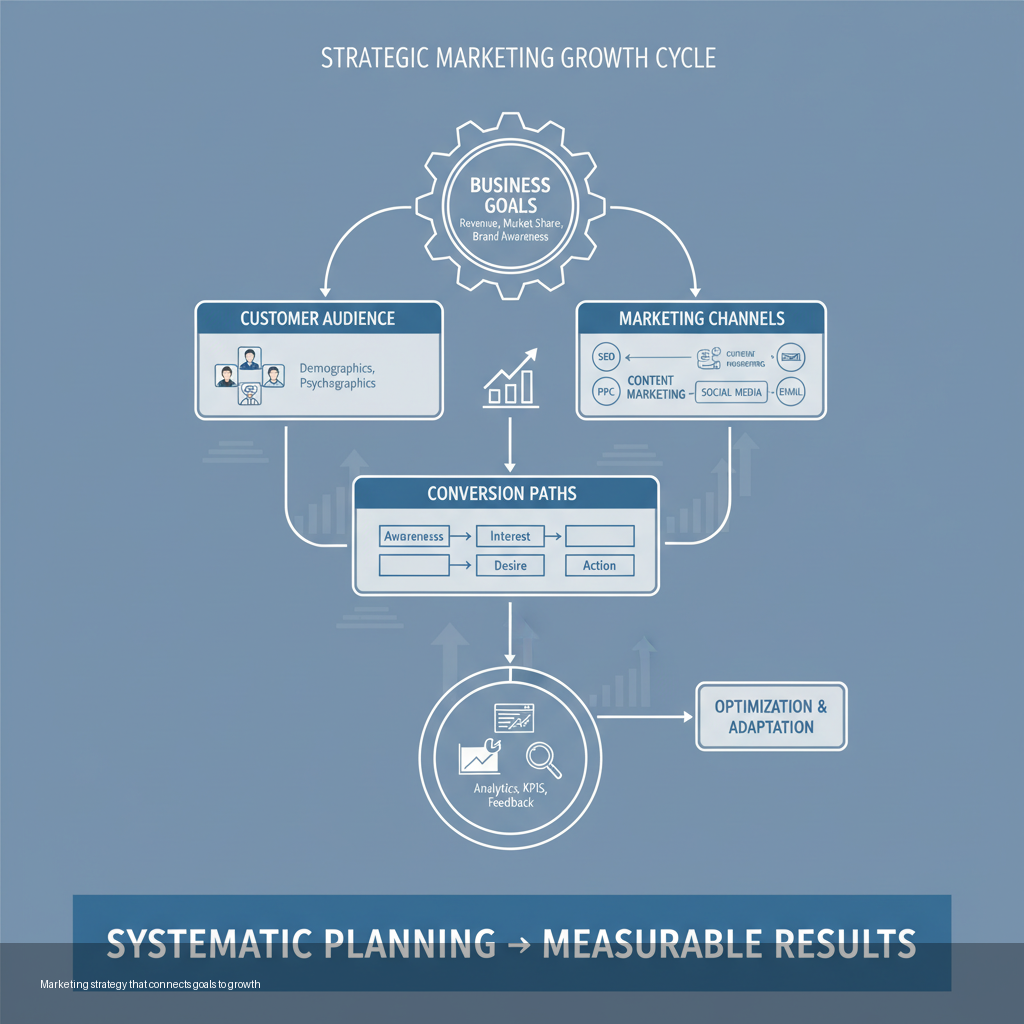
A marketing strategy for a flower business is the plan that connects your shop’s goals, customers, floral products, delivery options, seasonal demand, website, advertising, content, and measurement into one working system. Without a clear strategy, florists can spend time posting bouquets, running ads, updating product pages, and promoting holidays without knowing which activities support orders, inquiries, repeat customers, or event bookings.
This flower-focused guide builds on the broader principles explained in Zigma Internet Marketing’s article on marketing strategy that connects goals to growth, but applies them to the realities of florists, flower delivery services, wedding floral studios, event designers, and online flower shops.
For a florist or floral business owner, the real value of strategy is clarity. A strong plan helps you decide who you want to reach, what they are buying flowers for, which channels should attract them, what message should encourage action, and how you will know whether your marketing is creating meaningful business results.
Flower marketing can be especially complex because demand changes by season, occasion, location, and customer intent. Valentine’s Day buyers, sympathy arrangement customers, wedding couples, corporate clients, and weekly flower subscription customers may all need different messages and conversion paths. A strategy helps keep those moving parts connected.
Why flower businesses need more than pretty posts
Beautiful floral photography matters, but attractive images alone do not create a complete marketing strategy. A flower shop may have strong Instagram posts, seasonal promotions, Google Ads, email campaigns, and product pages, but those activities can become scattered if they are not tied to a business goal.
A practical strategy starts with a specific commercial target. “Get more visibility” is too broad. A more useful goal might be increasing local flower delivery orders, receiving more wedding consultation requests, improving repeat purchases, promoting sympathy arrangements, growing corporate accounts, or reducing low-intent inquiries during busy seasons.
The target shapes the rest of the strategy. A local florist that wants more same-day delivery orders may need local SEO pages, optimized product categories, clear delivery information, Google Business Profile activity, and search ads for urgent purchase intent. A wedding floral designer may need portfolio content, consultation forms, venue-related pages, and educational articles that help couples understand floral budgets, styles, and timelines.
If your floral business is planning across search, paid media, content, website performance, and analytics, Zigma’s Digital Marketing Services page outlines service areas that can support a more complete marketing system.
Start with the floral business goal
A flower marketing strategy should begin with the result you want, not the channel you prefer. Before deciding whether to focus on SEO, social media, Google Ads, email, or website updates, define the outcome that matters most to the business.
- Local flower delivery: More orders from people searching for arrangements in your delivery area.
- Wedding flowers: More qualified consultation requests from couples planning ceremonies and receptions.
- Event florals: More inquiries from businesses, planners, venues, or hosts.
- Online flower sales: More product purchases through a clear and easy checkout path.
- Customer retention: More repeat orders, subscription purchases, or seasonal return customers.
- Seasonal campaigns: Better planning around Valentine’s Day, Mother’s Day, holidays, graduations, and memorial occasions.
When the goal is clear, marketing decisions become easier. If the priority is wedding inquiries, a general “buy flowers now” message may not be enough. If the priority is urgent local delivery, broad floral inspiration content may not convert as quickly as a location-specific product page with clear delivery details.
How strategy turns floral marketing activity into decisions
A marketing strategy is not just a posting calendar. A calendar can support execution, but it does not replace the deeper work of understanding the customer, defining the offer, choosing channels, building the conversion path, and measuring results.
For flower businesses, the customer’s intent often depends on the occasion. Someone searching for “same-day roses near me” is likely much closer to purchase than someone browsing “spring wedding bouquet ideas.” Someone looking for sympathy flowers may need reassurance, simplicity, and sensitivity. A corporate customer may care about reliability, invoicing, delivery coordination, and recurring service.
Strategy creates rules for making choices. If buyers already search for your products, SEO and paid search may deserve attention. If your arrangements require visual inspiration, social media and portfolio content may help. If visitors reach your site but do not order, product page improvements, checkout clarity, and conversion rate optimization may be more useful than adding more traffic.
Search visibility is often important for florists because many buyers use location, occasion, flower type, and urgency in their searches. If organic search is a priority, SEO Services can support technical improvements, content planning, and organic performance measurement.
Core parts of a strong flower marketing strategy
A strong floral marketing strategy usually includes several connected parts. Each part answers a practical decision question that affects budget, timing, content, advertising, and reporting.
- Business goal: Decide whether the main focus is delivery orders, wedding leads, event inquiries, subscriptions, retail traffic, online purchases, or repeat customers.
- Audience definition: Identify who you are trying to reach, such as local gift buyers, wedding couples, corporate clients, funeral customers, event planners, or flower enthusiasts.
- Occasion mapping: Connect customer needs to occasions such as birthdays, anniversaries, sympathy, weddings, holidays, graduations, new baby gifts, and seasonal decor.
- Positioning: Clarify why customers should choose your floral business, whether that reason is design style, local delivery coverage, custom work, freshness, service, convenience, or specialization.
- Channel roles: Assign a job to SEO, PPC, social media, email, content, product pages, and website design.
- Measurement plan: Track actions such as calls, online orders, consultation requests, form submissions, product views, checkout activity, and repeat purchases where possible.
The sequence matters. Starting with tactics can create noise. Starting with the floral business goal makes each tactic easier to accept, reject, or improve.
Choosing marketing channels for a flower business
Channel planning should reflect customer intent, timing, visual needs, and your business model. A same-day flower delivery shop may need a different mix than a luxury wedding florist or a studio focused on corporate installations.
SEO, PPC, social media, and content roles for florists
A) SEO: Search engine optimization can support long-term visibility for local, product, occasion, and informational searches.
- How it works: SEO improves technical access, page structure, content relevance, internal linking, and user experience so search engines can better understand flower-related pages.
- Best fit: SEO fits florists that want durable visibility for terms related to flower delivery, wedding flowers, sympathy flowers, seasonal arrangements, and local service areas.
- Example: A florist may create dedicated pages for birthday flowers, sympathy arrangements, wedding bouquets, and delivery areas.
B) PPC: Pay-per-click advertising can support faster visibility for high-intent searches, especially during seasonal or urgent buying periods.
- How it works: PPC uses keywords, ad copy, bidding, negative keywords, landing pages, and conversion tracking to manage paid acquisition.
- Best fit: PPC fits flower businesses that need demand testing, seasonal campaigns, or near-term order volume while organic visibility develops.
- Example: A florist may run search ads for same-day flower delivery, then compare order quality and cost against organic traffic.
C) Social media: Social platforms help florists show visual style, seasonal products, behind-the-scenes work, and event portfolios.
- How it works: Social content can highlight arrangements, design process, shop updates, customer occasions, seasonal collections, and floral inspiration.
- Best fit: Social media fits businesses where design style, trust, and visual preference influence the buying decision.
- Example: A wedding florist may use social posts to show ceremony installations, bouquet styles, and seasonal color palettes.
D) Content: Content can answer buyer questions, support search visibility, and reduce repeated sales conversations.
- How it works: Content addresses questions about flower care, wedding timelines, sympathy etiquette, seasonal blooms, delivery details, and arrangement selection.
- Best fit: Content fits florists with recurring customer questions, specialized services, or products that require explanation before purchase.
- Example: A guide to choosing sympathy flowers can help customers make a sensitive decision with more confidence.
Paid media and organic search often work better together than separately. Google Ads can reveal which search terms create stronger order or inquiry intent, while SEO can turn useful insights into lasting pages. For businesses using paid search, Google Ads Management can help connect queries, ads, landing pages, and tracking into one feedback loop.
What separates a floral marketing plan from a useful strategy
A plan lists tasks. A useful strategy explains why those tasks matter, what they are expected to change, and how the florist will decide whether to continue, adjust, or stop them.
For example, a task list might say, “Post bouquet photos three times a week.” A strategy would ask which audience those posts serve, what occasion they connect to, which product or service they support, and what action the viewer should take next.
Useful comparison:
A task list says, “Promote spring flowers.”
A strategy says, “Create a spring collection for local delivery customers and support it with product pages, email, social posts, and search ads.”
A measurement plan says, “Track product views, add-to-cart activity, completed orders, calls, and traffic source performance during the campaign period.”
The third version gives the business a way to learn, not just stay busy.
This is where analytics becomes important. GA4 setup, Google Tag Manager, conversion tracking, and reporting dashboards are not just technical details. They help a flower business distinguish between attention, interest, and meaningful actions such as orders, calls, quote requests, and consultations.
Building a flower marketing strategy in practical steps
Step 1: Define the commercial target
Name the business result before choosing channels. The target might be more online flower orders, more qualified wedding inquiries, more local delivery customers, more repeat purchases, or better seasonal campaign performance.
Key signal: The target should connect to revenue, order quality, consultation quality, or customer retention rather than visibility alone.
Common issue: Florists may track likes and views while the business actually needs orders, calls, or serious event inquiries.
Example: A shop may shift from “get more website traffic” to “increase online orders for local birthday and anniversary flower delivery.”
Step 2: Map flower buyers by occasion and intent
Separate urgent buyers, gift buyers, wedding clients, event customers, sympathy customers, and repeat purchasers. Each group may need different messaging, pages, products, and calls to action.
Key signal: Search queries, product page behavior, sales questions, consultation forms, and phone inquiries can reveal intent.
Common issue: Sending every visitor to a general homepage can create friction when buyers need a specific arrangement, service, or delivery answer.
Example: A same-day delivery customer may need fast product selection and delivery cutoff information, while a wedding customer may need a portfolio and consultation process.
Step 3: Assign each channel a job
Every channel should have a defined purpose. SEO may capture recurring searches, PPC may support seasonal or urgent demand, social media may show design style, email may encourage repeat orders, and content may answer common questions.
Key signal: Each channel should have a primary performance measure and a secondary diagnostic measure.
Common issue: Social media may be judged only by direct orders, while search ads may be judged only by clicks, even though the customer behavior behind each channel is different.
Example: Instagram may support wedding floral credibility, while Google Search ads capture people actively looking for flower delivery today.
Step 4: Improve the conversion path
Traffic has limited value if the website makes ordering or inquiry difficult. Product pages, delivery details, forms, checkout steps, mobile layout, page speed, and trust signals can all affect conversion.
Key signal: Watch online orders, form completions, call clicks, checkout drop-off, product engagement, and conversion rate by traffic source.
Common issue: A florist may increase ad spend before checking whether the website clearly explains delivery areas, prices, customization options, or next steps.
Example: A wedding floral inquiry page may improve when it clearly explains consultation steps, event details needed, portfolio examples, and a simple request form.
Step 5: Review, adjust, and document decisions
A strategy should create a review cycle. Flower businesses need to compare campaigns, channels, products, seasonal performance, and customer behavior so future decisions are based on evidence rather than guesswork.
Key signal: Review order quality, inquiry quality, conversion rate, cost per qualified inquiry, repeat purchases, and campaign notes together.
Common issue: Teams may stop campaigns too early or continue weak promotions because no one defined what success should look like.
Example: After a seasonal campaign, a florist can document which products received attention, which channels drove orders, and which pages need improvement before the next holiday period.
Common mistakes that weaken flower marketing strategy
Most flower marketing problems do not come from a lack of effort. They often come from disconnected effort. A florist can post regularly, run ads, update the website, and send emails while still struggling if those activities are not connected to a measurable business goal.
- Starting with channels instead of customers: Choosing Instagram, SEO, or PPC first can hide the deeper question: what does the customer need and when are they ready to act?
- Promoting everything at once: Flower businesses often have many products and occasions, but campaigns are clearer when they focus on a specific audience or need.
- Ignoring local intent: Many floral searches include urgency and location, so delivery areas, local pages, and Google Business Profile details matter.
- Measuring activity instead of outcomes: Likes, impressions, and clicks are useful only when connected to orders, calls, inquiries, or repeat customers.
- Overlooking the website experience: More traffic will not fix unclear delivery information, weak product descriptions, slow pages, or confusing checkout steps.
- Changing too much at once: If ads, pages, prices, audiences, and tracking all change together, it becomes harder to understand what affected performance.
Good strategy creates focus. It does not remove creativity from floral marketing; it gives creative work a clearer business purpose.
Where SEO, PPC, CRO, and analytics fit for florists
SEO, PPC, conversion rate optimization, and analytics should not operate as separate projects. For a flower business, they work best as a connected system.
SEO can help capture organic visibility for flower delivery, floral services, seasonal arrangements, and informational searches. PPC can test high-intent searches and seasonal promotions faster. CRO improves the path from visit to order or inquiry. Analytics helps show which signals are reliable enough to guide budget, content, and website decisions.
A connected system works like a loop. Paid search terms can reveal what people are ready to buy. SEO pages can answer recurring questions. Product page behavior can show where customers hesitate. CRO changes can improve both paid and organic results. Analytics can show whether marketing activity is producing useful actions.
Website design and development also matter because site structure, page speed, mobile usability, product management, tracking scripts, and checkout flow all influence marketing performance. For site-related planning, Website Design & Development can support the technical foundation behind campaign execution.
How to judge whether your flower marketing strategy is working
A strategy is working when the floral business can connect marketing activity to a meaningful change. Not every channel will show results at the same speed, but reporting should help you understand whether the plan is moving in the right direction.
Useful performance signals
- Order quality: Online orders should align with the products, delivery areas, and margins the business wants to support.
- Inquiry quality: Wedding, event, and corporate inquiries should include enough fit and detail to justify follow-up.
- Conversion rate: Visitors should have a clear path to order, call, request a quote, or book a consultation.
- Cost per qualified inquiry: Paid campaigns should be judged by useful leads or orders, not only clicks or form fills.
- Organic visibility by topic: SEO progress should be reviewed by page groups such as delivery, weddings, sympathy, events, and seasonal flowers.
- Repeat purchase activity: Where possible, track returning customers, email engagement, subscriptions, and seasonal reorder behavior.
The review should include context. A campaign that produces fewer but better-fit wedding inquiries may be healthier than one that creates many vague requests. A product page with strong traffic but weak orders may need clearer pricing, photos, delivery details, or calls to action.
FAQs About Flower Marketing Strategy
It should be detailed enough to guide the target audience, offer, channel selection, messaging, tracking, and review process. It does not need to predict every post or promotion. The goal is to define who you are trying to reach, what action you want them to take, and how you will measure progress.
The right starting point depends on the business goal. SEO is often useful when customers search for local delivery, occasions, or specific floral services. Social media is valuable when visual style, inspiration, and trust influence the decision. Many flower businesses benefit from using both with different roles.
Yes. A smaller budget often makes focus more important. A practical strategy can begin with a narrow audience, a few priority products or services, clear delivery and inquiry pages, basic tracking, and consistent review of calls, orders, and form submissions.
Monthly performance checks and seasonal reviews are useful for many flower businesses. Major occasions such as Valentine’s Day, Mother’s Day, wedding season, and holiday periods may require earlier planning and post-campaign review.
A reset may be needed when the business gets traffic but few orders, receives many poor-fit inquiries, cannot connect campaigns to outcomes, or has unclear messaging across products and services. Before rebuilding everything, check tracking quality, audience fit, offer clarity, website usability, and the conversion path.
A clearer path from floral effort to business evidence
A strong marketing strategy helps flower businesses choose, measure, and improve with more confidence. The clearest plans define the business target, understand the buyer’s occasion and intent, assign each channel a role, strengthen the website conversion path, and review performance with context.
For florists, floral studios, and online flower shops, the goal is not to remove creativity from marketing. The goal is to connect creative work to orders, inquiries, repeat customers, and long-term growth. If you want support reviewing your current marketing plan, you can request a strategy review.